Bala Quila Alwar History: The Fort Babur and Jahangir Both Slept In
A hill fort above Alwar that saw Mughal guests, a royal exile and a Rajput founder. The story of Bala Quila and how to plan a visit with Bhangarh.
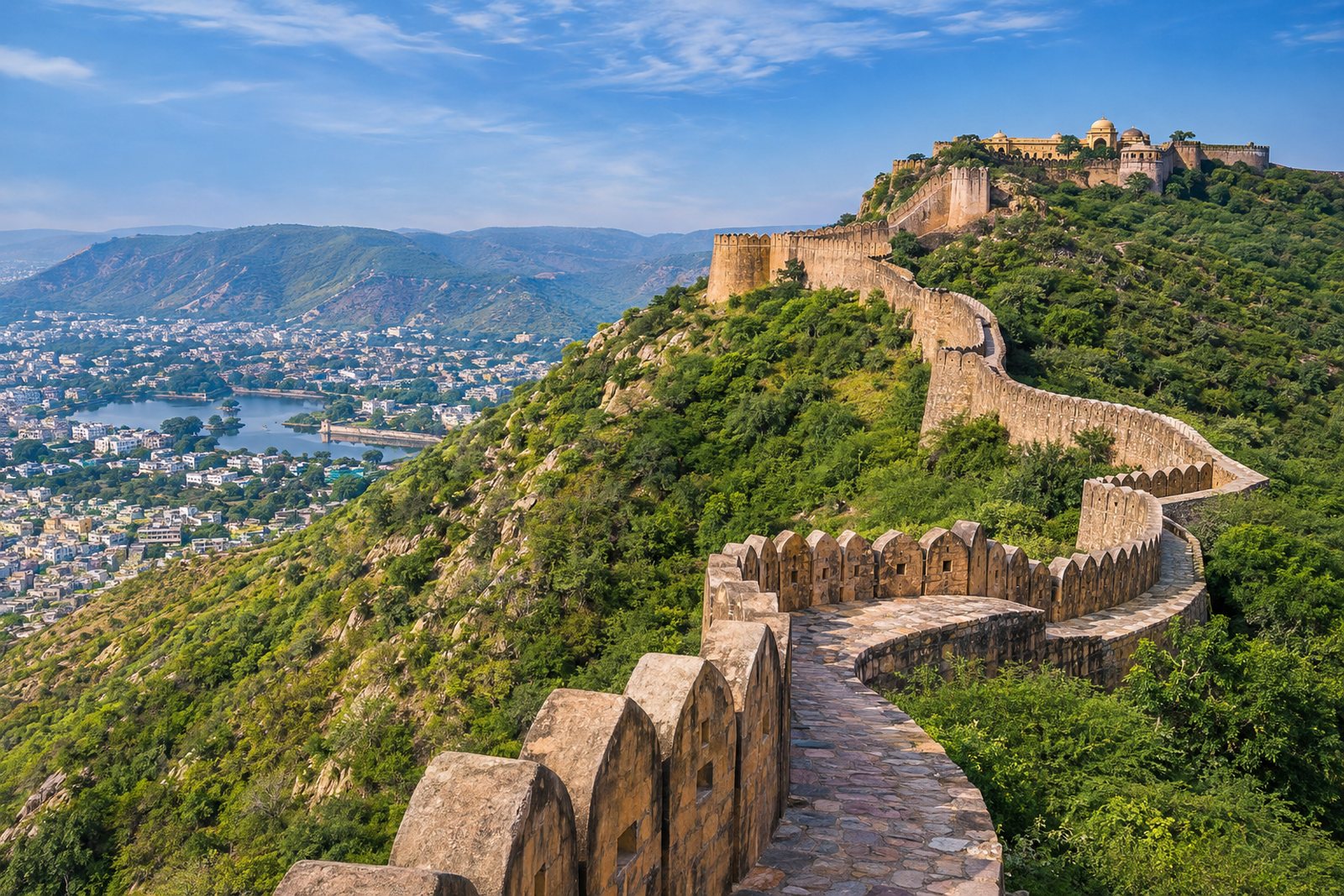
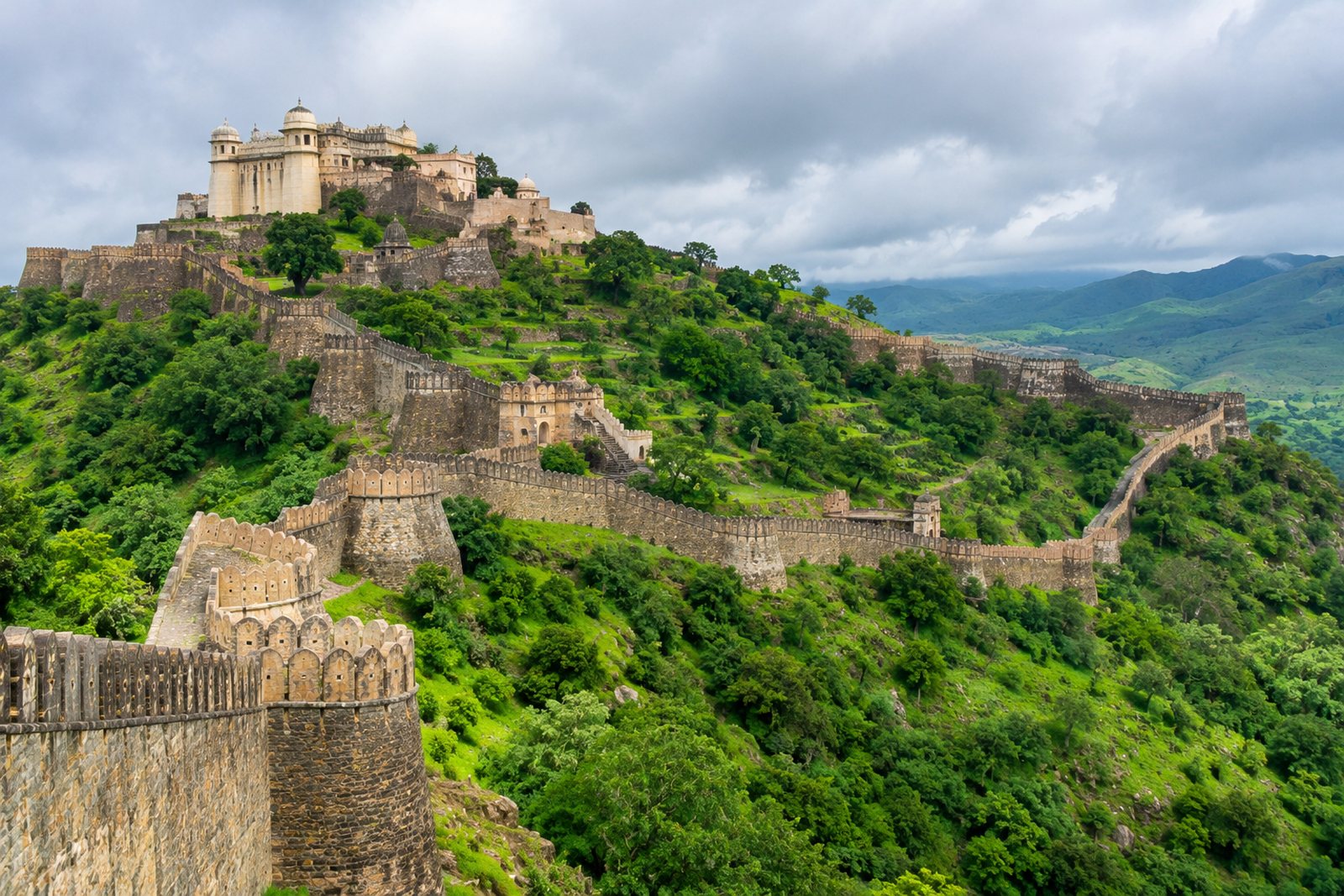
Ask anyone in Alwar's old market for directions to Bala Quila and they will not point. They will just lift their chin towards the ridge. The fort is that obvious. A long line of walls and bastions runs along the top of the Aravalli hills, high above the rooftops, the temples and the evening traffic of the city.
Bala Quila, which simply means "the fort above", is older than the kingdom of Alwar itself. Over the centuries it had some famous guests, one exiled prince and a lot of new owners. Here is that story, and how to fit the fort into an Alwar and Bhangarh trip.
A fort older than the kingdom below
Most people assume the city came first and the fort was built to protect it. In Alwar it was the other way round.
The hill was a natural watchtower over the routes between Delhi and the interior of Rajasthan. The fort as we know it is often credited to Hasan Khan Mewati, a 16th century chieftain of the Mewat region, though local traditions speak of older Rajput defences on the same ridge. Historians do not agree on every detail. What everyone agrees on is that whoever held this hill could see trouble coming from a long way off.
The Mughal guests
Then came the Mughals.
It is said that Babur, the founder of the Mughal empire, spent a night at the fort on his campaigns in the region. The story is told in Alwar with some pride, though the details are hard to pin down. Either way, the fort clearly mattered to the new rulers of Delhi.
The better known guest came later. Prince Salim, Akbar's son and the future Emperor Jahangir, fell out with his father and spent a period of exile away from the court. Tradition places part of that exile here, on this quiet ridge, far from the noise of Agra. A building inside the fort still carries his name: Salim Mahal.
Picture a young prince, angry and a little lost, pacing these walls and looking out over a forest. A few years later he would be emperor of most of India. History has a sense of humour.
Did you know? The kingdom of Alwar is quite young by Rajasthan standards. It was founded in the 1770s, when Pratap Singh of the Kachhwaha clan took the fort and made Alwar the capital of a new state. Bala Quila was already centuries old by then.
Gates, towers and a lot of walking
The walls climb and dip with the ridge for several kilometres, with many bastions along the way. The fort has several gates, each with its own name, such as Jai Pol, Suraj Pol and Laxman Pol. Inside you will find the remains of palaces, a few temples and old water tanks that once kept the garrison alive through sieges.
It is not a polished fort. No light and sound show, no cafe. Some parts are crumbling, some are overgrown, and monkeys have strong opinions about your snacks. That is also its charm. On a clear winter morning the view down to Alwar and its lakes is the kind of thing you remember long after the photos are forgotten.
Alwar below the fort
Come down from the ridge and the city has its own layers. The City Palace, with a museum of manuscripts, weapons and miniature paintings. The Moosi Maharani ki Chhatri, a cenotaph with a red sandstone base and white marble top beside a temple tank. A little outside town, Siliserh Lake with its old lake palace. And further along the road, the forests of Sariska.
Then there is the place everyone in the car is secretly waiting for. Bhangarh, the ruined town that half of India knows as "the haunted fort". The legends about it are told loudly. The ruins themselves, with their bazaar street, temples and palace, are quieter and more interesting than the ghost stories.
The Alwar & Bhangarh package gives you 2 nights in Alwar, with a full day of Alwar sightseeing and a day for Bhangarh and Ajabgarh as per the package itinerary. It is an easy long weekend from Delhi or Jaipur.
How to visit Bala Quila today
- Where: On the ridge above Alwar city, in the Aravalli hills. The road up is narrow and winding.
- Permission: The hill falls in a protected forest area. Entry rules and permissions have changed over the years, so check locally before you plan the climb or drive.
- Best time: October to March. Go in the morning, before the sun gets strong on the exposed walls.
- Wear: Comfortable shoes. The paths are uneven and there is very little shade.
- Carry: Water and a cap. Keep food in your bag because of the monkeys.
- Combine with: City Palace, Moosi Maharani ki Chhatri, Siliserh Lake and Bhangarh.
Our tip: Do Bala Quila and the City Palace on the same morning and keep Bhangarh for a separate day. The ruins at Bhangarh close by sunset, and it is not a place to rush.
The fort that watched them all come and go
Bala Quila has outlived almost everyone who slept inside it. Afghan chiefs, Mughal princes, Rajput kings, British-era officials. They all came, held the hill for a while and moved on. The walls stayed. Stand up there in the early light, with Alwar waking up below, and you understand why everyone wanted it.
Want more of offbeat Rajasthan? Read our offbeat Rajasthan trip guide or browse all Alwar holiday packages.
Frequently asked questions
Who built Bala Quila in Alwar?
The fort is older than the Mughal period. It is often credited to Hasan Khan Mewati in the 16th century, while some traditions trace earlier defences on the hill to local Rajput clans. Historians differ on the exact origins.
Did Jahangir stay at Bala Quila?
Tradition holds that Prince Salim, later Emperor Jahangir, stayed at the fort during his period of exile from Akbar's court. A building inside is still known as Salim Mahal.
Is Bala Quila open to tourists?
Visitors can usually go up to the fort, but the hill falls in a protected forest area and entry rules have changed over the years. Check locally with the authorities before you go.
How far is Bhangarh from Alwar?
Bhangarh is around 80 to 90 km from Alwar, roughly 2 hours by road, which makes it an easy day trip from an Alwar base.
What else can I see in Alwar?
Alwar's City Palace and its museum, the Moosi Maharani ki Chhatri, Siliserh Lake and the nearby Sariska tiger reserve are the usual sights.