Akshayavat Legend: The Immortal Banyan of Prayag
The undying banyan inside Allahabad Fort is said to survive the end of the world. The Akshayavat legend, what history records and how to get darshan today.
Most trees are counted in years. A few very old ones are counted in centuries. The banyan behind the walls of the fort at Prayagraj, devotees will tell you, is counted in yugas.
Its name says it all. Akshaya, that which never decays. Vat, the banyan. When the world ends, the story goes, this is the tree that will still be standing. This is the Akshayavat legend, along with what travellers and historians have recorded about the tree, and how to get its darshan on a Sangam trip today.
The legend: a child on a leaf at the end of the world
The best-known story belongs to the sage Markandeya.
Markandeya, blessed with a life far longer than any human, once asked Lord Vishnu to show him his maya, the power behind the world's appearance. Be careful what you ask for. The sky darkened, rain began to fall, and the waters rose until every mountain, every city and every forest had gone under. The sage found himself alone, swimming in an endless grey ocean.
Then he saw it. One banyan tree, standing above the flood. And on one of its leaves lay a small dark child, calmly sucking his toe, as if the end of the universe were a quiet afternoon.
The child was Vishnu. When Markandeya came close, he was drawn inside the child's body and saw the whole universe within him, every world, every age. Then he was out again, back at the tree.
Many traditions, including the pandas of Prayag, identify that undying banyan with the Akshayavat. As long as it stands, the belief goes, creation can begin again.
Ram, Sita and the banyan by the Yamuna
There is a gentler story too. On their way into exile, Ram, Sita and Lakshman reached Prayag and met the sage Bharadwaj at his ashram near the confluence. Tradition says they rested in the shade of a great banyan near the Yamuna, and that Sita folded her hands before it and prayed for their safe return. Many local tellings say that tree was the Akshayavat.
So when a family from Bihar or Bundelkhand stands before it today, saree pallu over the head, they are standing where the legend says Sita stood.
What history says
Here the record gets interesting.
In the 7th century, the Chinese Buddhist pilgrim Xuanzang travelled through India and left detailed notes. At Prayag, he described a great tree in front of a temple, and a grim custom of people giving up their lives there in the hope of a better rebirth. Historians often connect his account with the Akshayavat. It tells us that a sacred tree at the confluence was already famous more than a thousand years ago.
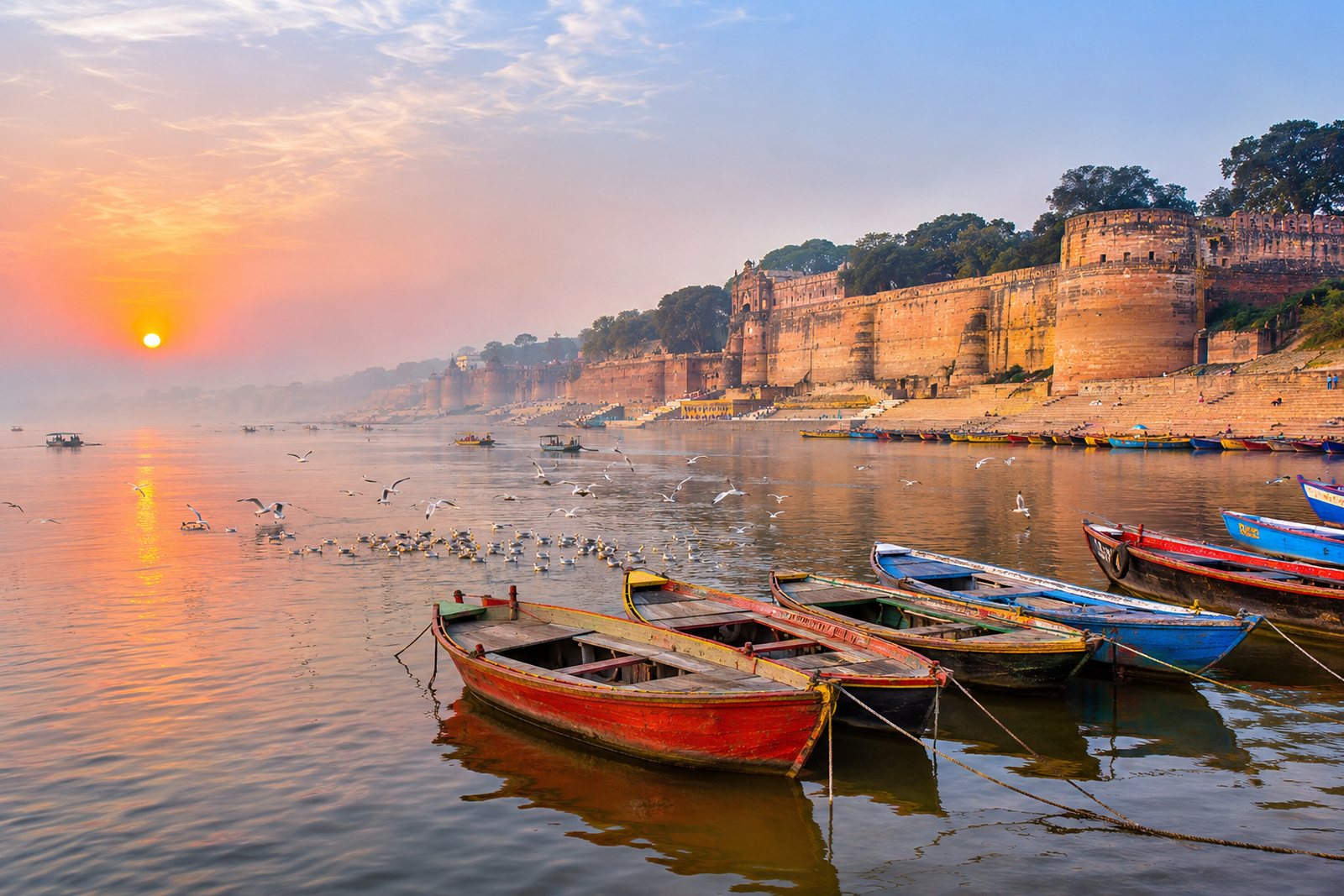
In the late 16th century, the Mughal emperor Akbar built a massive fort at the meeting point of the Ganga and Yamuna. The sacred tree ended up inside its walls. Over the following centuries, and especially after the fort came under military control, reaching the tree became difficult. Pilgrims usually worshipped at the Patalpuri temple, an underground shrine within the fort area, instead.
That changed in recent years. Around the 2019 Kumbh, access to the Akshayavat was opened up for pilgrims, and it has since become part of the standard Sangam darshan.
Did you know? Prayagraj is not the only place with an Akshayavat. Gaya in Bihar has its own, central to pind daan rituals for ancestors, and Varanasi too has a revered banyan by that name. Each tradition holds its tree close.
How to visit Akshayavat today
- Where: inside the Allahabad Fort complex near the Sangam. Entry for darshan is through a designated gate; most of the fort itself remains with the Army and is not open.
- Security: expect checks at the gate. Carry an ID and keep bags small.
- Timings: they can change, especially during melas, so check locally before you go.
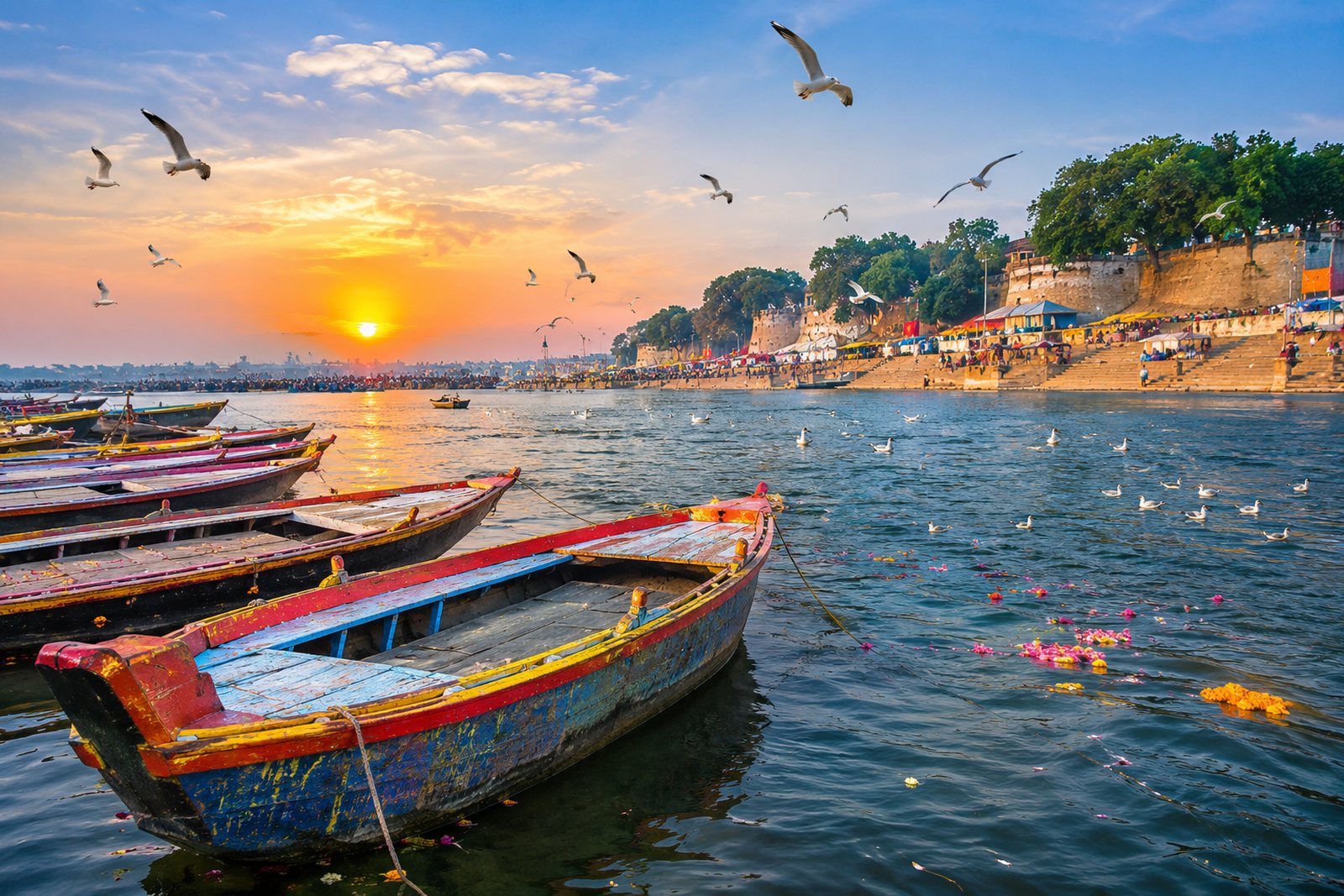
- Combine with: a boat ride to the Triveni Sangam, the reclining Bade Hanuman temple nearby, the Patalpuri temple and Alopi Devi.
- Mela seasons: the Magh Mela every winter and the Kumbh years bring enormous crowds. The Maha Kumbh of 2025 drew pilgrims in crores. Plan around them, or plan for them.
- Elders: there is walking on uneven ground near the Sangam; carry water and take breaks.
- Best season: October to March. Winter mornings at the confluence are cold and misty, and lovely.
Our tip: Take your Sangam boat in the early morning, then walk to the Akshayavat straight after, before the day's crowd gathers at the fort gate.
BellaSafar's Prayagraj Sangam & Alopi Devi is a two-night trip with the Triveni Sangam, Allahabad Fort and Anand Bhavan on day one and Khusro Bagh, Alopi Devi and the colonial city on day two, as per the package itinerary. For a bigger yatra, Kashi Ayodhya Prayag Yatra adds Varanasi and Ayodhya over five nights.
The tree that waits
Think of everything that has passed this banyan. Sages, exiles, a Chinese monk with a notebook, an emperor's builders, soldiers, crores of pilgrims. The legend says it will still be there when all of that is gone. You do not have to believe it to feel small standing in front of it. That feeling is probably the point.
Read our Prayagraj Sangam trip guide, or browse all Prayagraj holiday packages.
Frequently asked questions
What is the Akshayavat legend?
Legend says that when the world was drowned in the final flood, the sage Markandeya saw one banyan still standing, with baby Vishnu on a leaf. That undying tree is identified with the Akshayavat.
Where is Akshayavat in Prayagraj?
It is inside the Allahabad Fort complex near the Triveni Sangam. Pilgrims enter through a designated gate for darshan.
Can the public see Akshayavat now?
Yes. Access was opened up for pilgrims around the 2019 Kumbh. Timings can change during melas, so check locally.
Is Akshayavat mentioned in history?
The 7th-century pilgrim Xuanzang described a great sacred tree at Prayag, and historians often connect his account with the Akshayavat.
What else can I see near Akshayavat?
The Triveni Sangam boat ride, the Patalpuri temple, the reclining Bade Hanuman temple and Alopi Devi temple are all close by.