Sanchi Buddhist Circuit: Stupas, Satdhara and Udayagiri
Ashoka's Great Stupa, the quiet stupas of Satdhara, Udayagiri's Gupta caves and the Heliodorus pillar: a story-led guide to the Sanchi Buddhist circuit near Bhopal.
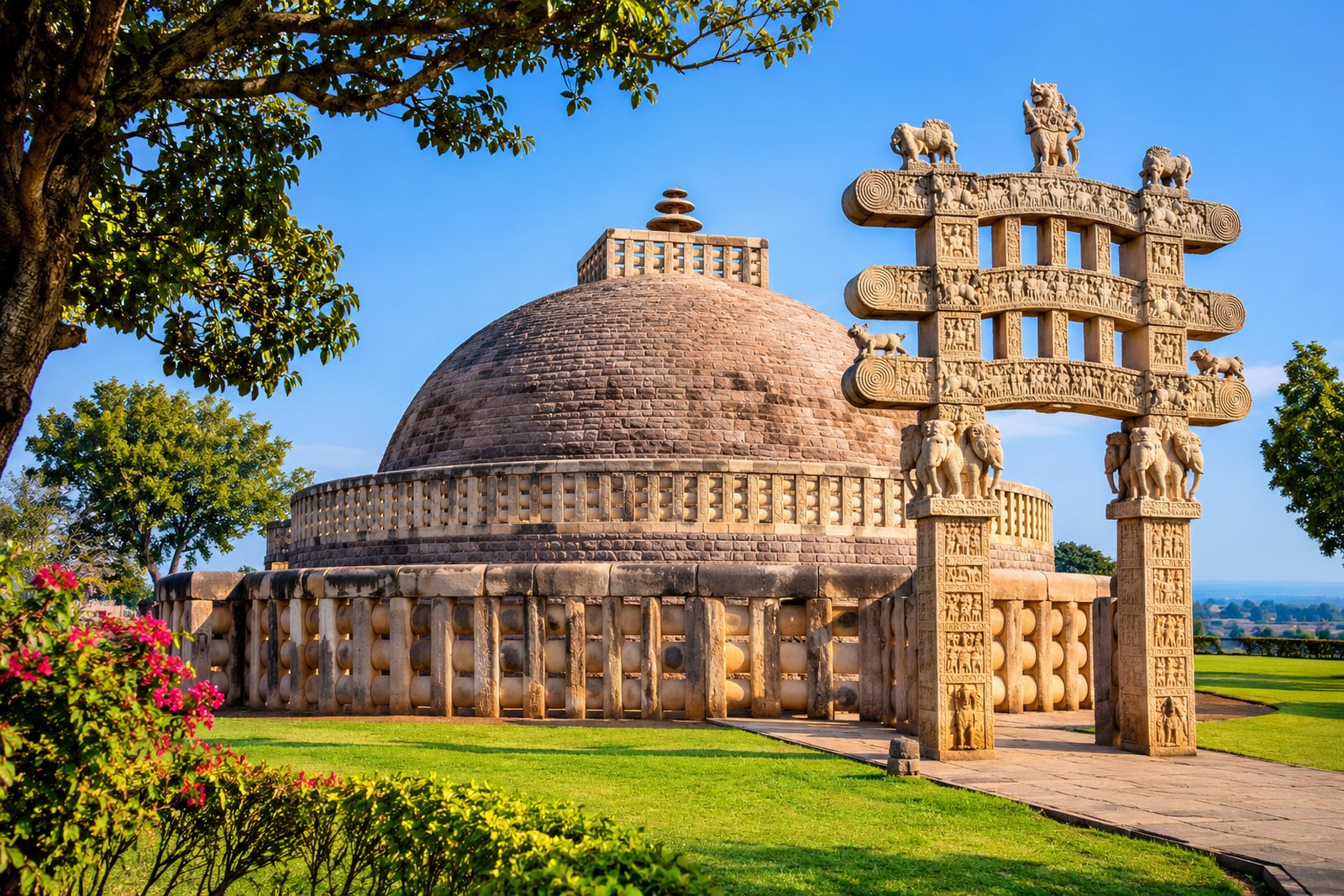
The first thing that surprises people at Sanchi is the silence. No loudspeakers, no line of rickshaws, no one selling anything at the top. Just a big round dome of stone on a low hill, four carved gateways, and parrots arguing in the trees. You climb up from the car park expecting a monument and find a kind of pause.
This is the heart of the Sanchi Buddhist circuit, a cluster of stupas, caves and pillars about an hour from Bhopal. Here is the story behind it, the nearby sites most visitors skip, and how to plan it as a day trip.
Why did Ashoka choose a hill near Vidisha?
In the 3rd century BCE, Vidisha was a wealthy trading town on the routes of central India. The emperor Ashoka, after the bloody Kalinga war, turned to the Buddha's teaching and began building stupas across his empire. A hill near Vidisha, with traders and monks nearby, made sense. Tradition also links Ashoka's wife Devi to Vidisha, though accounts differ on the details.
The first stupa here was a smaller brick structure over relics. Later generations covered it in stone and made it much bigger. What you see today is a few centuries of devotion layered over Ashoka's beginning.
The gateways that tell stories without showing the Buddha
Walk slowly around the four toranas of the Great Stupa. They were added around the 1st century BCE and are covered in carvings: processions, battles, elephants, city gates, women leaning from balconies, Jataka tales of the Buddha's earlier lives.
Now look for the Buddha himself. You will not find him as a human figure. Early Buddhist art showed him through symbols: an empty throne, a footprint, a Bodhi tree, a wheel, a parasol. Once you know this, the carvings turn into a game. Kids get very good at spotting "where is the Buddha" before the adults do.
Did you know? Relics linked to two of the Buddha's chief disciples, Sariputta and Mahamoggallana, were found at Sanchi in the 19th century, taken to Britain, and later returned. They are kept at a modern vihara on the hill and shown to devotees during an annual festival, usually around late November. Check the date locally.
Forgotten, then found
After Buddhism faded in the region, Sanchi slowly emptied. Trees grew over the stones. In 1818 a British officer came across the site, and what followed was messy: treasure hunters and amateur diggers damaged parts of it. Proper restoration came much later, in the early 20th century, under the Archaeological Survey. In 1989 UNESCO listed the Buddhist monuments at Sanchi as a World Heritage Site.
Satdhara, Udayagiri and the Greek's pillar
This is where the circuit gets interesting. Most tour buses do Sanchi and leave. A little more time gets you three very different places.
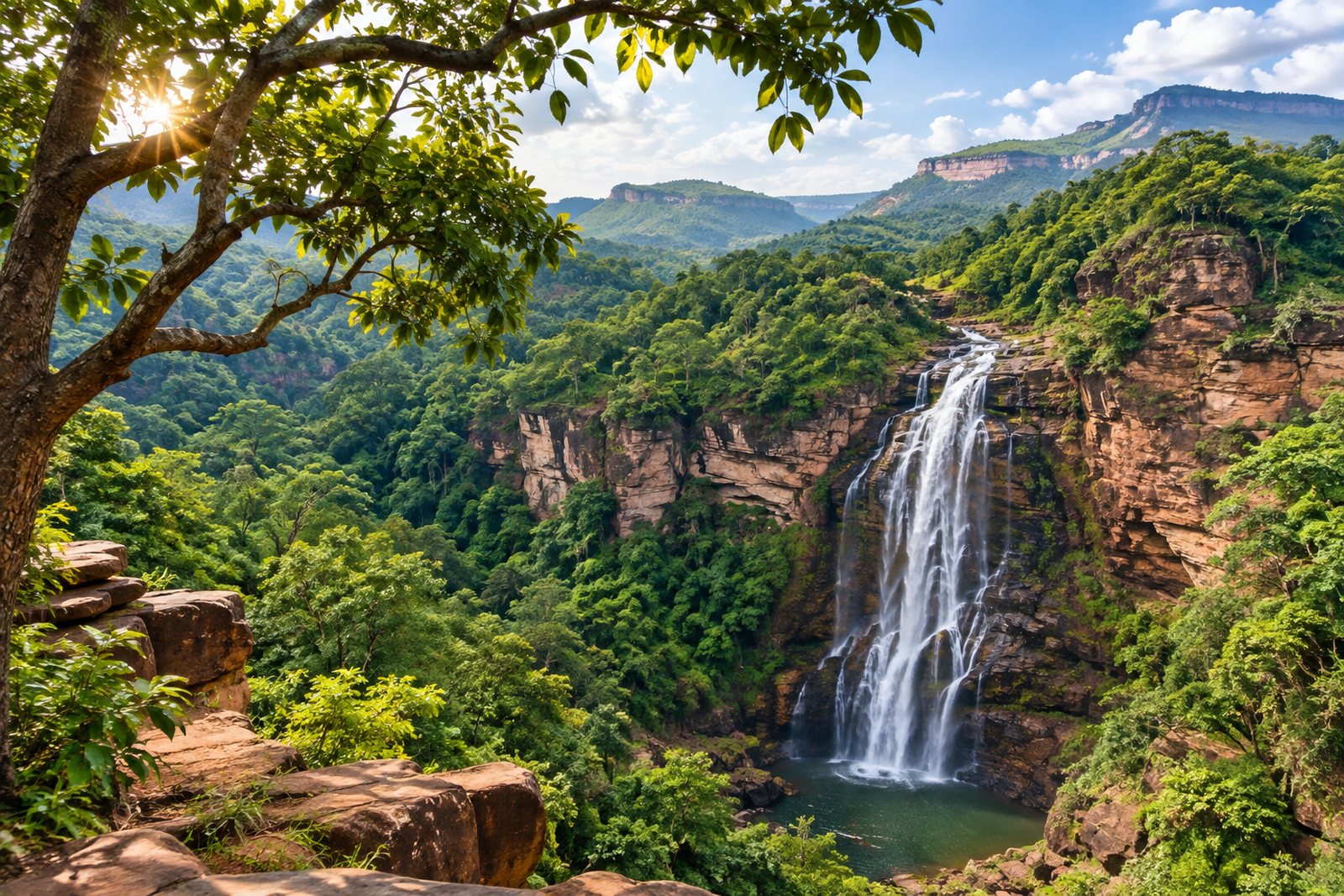
Satdhara is a group of old stupas and monastery ruins above the Halali river gorge, not far from Sanchi. Fewer people, more birds, a big sky. It feels like what Sanchi must have felt like a century ago.
Udayagiri caves, near Vidisha, are not Buddhist at all, which surprises people. They are mostly Hindu rock-cut caves from the Gupta period, with some Jain elements. The star is a huge carving of Vishnu as Varaha, the boar, lifting the earth goddess out of the ocean while rows of sages watch. It is one of the finest Gupta-era sculptures you can stand in front of.
The Heliodorus pillar, also near Vidisha and locally called Khamba Baba, is a stone column from around the 2nd century BCE. Its inscription says it was set up by Heliodorus, a Greek envoy, who called himself a devotee of Vasudeva. A Greek ambassador praying to Vishnu, more than two thousand years ago, in a field in Madhya Pradesh. That one stays with you.
Plan it from Bhopal
Bhopal makes the easiest base. A Bhopal & Sanchi trip gives you two nights with a Bhopal city day and a Sanchi day that covers the Great Stupa, Udayagiri caves and the Heliodorus pillar, as per the package itinerary.
With a third night, Bhopal Explorer adds the Bhimbetka rock shelters, where prehistoric paintings of hunters and animals cover the rock walls. And if you want the whole state, Grand Madhya Pradesh runs from Indore through Mandu, Maheshwar and Omkareshwar and ends with two nights in Bhopal.
How to visit the Sanchi circuit today
- Getting there: Sanchi is around 45 to 50 km from Bhopal by road. Vidisha, for Udayagiri and the pillar, is a short drive beyond Sanchi.
- Time needed: Half a day for Sanchi alone; a full day if you add Udayagiri, the pillar and Satdhara.
- Best time: October to March. Summer afternoons on that hill are harsh, with little shade.
- Entry: The site is managed by the ASI. Tickets, timings and photography rules change, so check the official ASI site or ask at the gate.
- Respect: The stupas are still sacred to Buddhists. Walk clockwise, do not climb on railings, and keep voices low near the vihara.
- Do not miss: The small archaeological museum near the site, which holds the lion capital found at Sanchi.
Our tip: Reach Sanchi early, do the Great Stupa first while it is cool, and keep Udayagiri for late morning. The Varaha panel is easier to see well before the afternoon glare sets in.
Why it stays with you
Most of our temple trips are loud and full, and we love them for that. Sanchi is the opposite. An emperor's regret, a few centuries of carvers, a long sleep under the jungle. You leave a little quieter than you came.
Doing more of the state? Read our Madhya Pradesh tour guide or browse all Bhopal holiday packages.
Frequently asked questions
Who built the Sanchi Stupa?
The Great Stupa was begun under the Mauryan emperor Ashoka in the 3rd century BCE. It was enlarged later, and the carved gateways were added around the 1st century BCE.
How far is Sanchi from Bhopal?
Sanchi is around 45 to 50 km from Bhopal, roughly an hour or a little more by road, so it is an easy day trip.
Are Udayagiri caves Buddhist?
No. The Udayagiri caves near Vidisha are mainly Hindu, with some Jain elements, and date largely to the Gupta period. They are usually visited on the same day as Sanchi.
What is Satdhara?
Satdhara is a group of old Buddhist stupas and monastery remains above the Halali river, not far from Sanchi. It is quieter and much less visited.
Is Sanchi worth visiting with kids?
Yes, if you keep it short. Kids enjoy spotting elephants, peacocks and stories in the gateway carvings. Go in the morning, carry water and avoid summer afternoons.