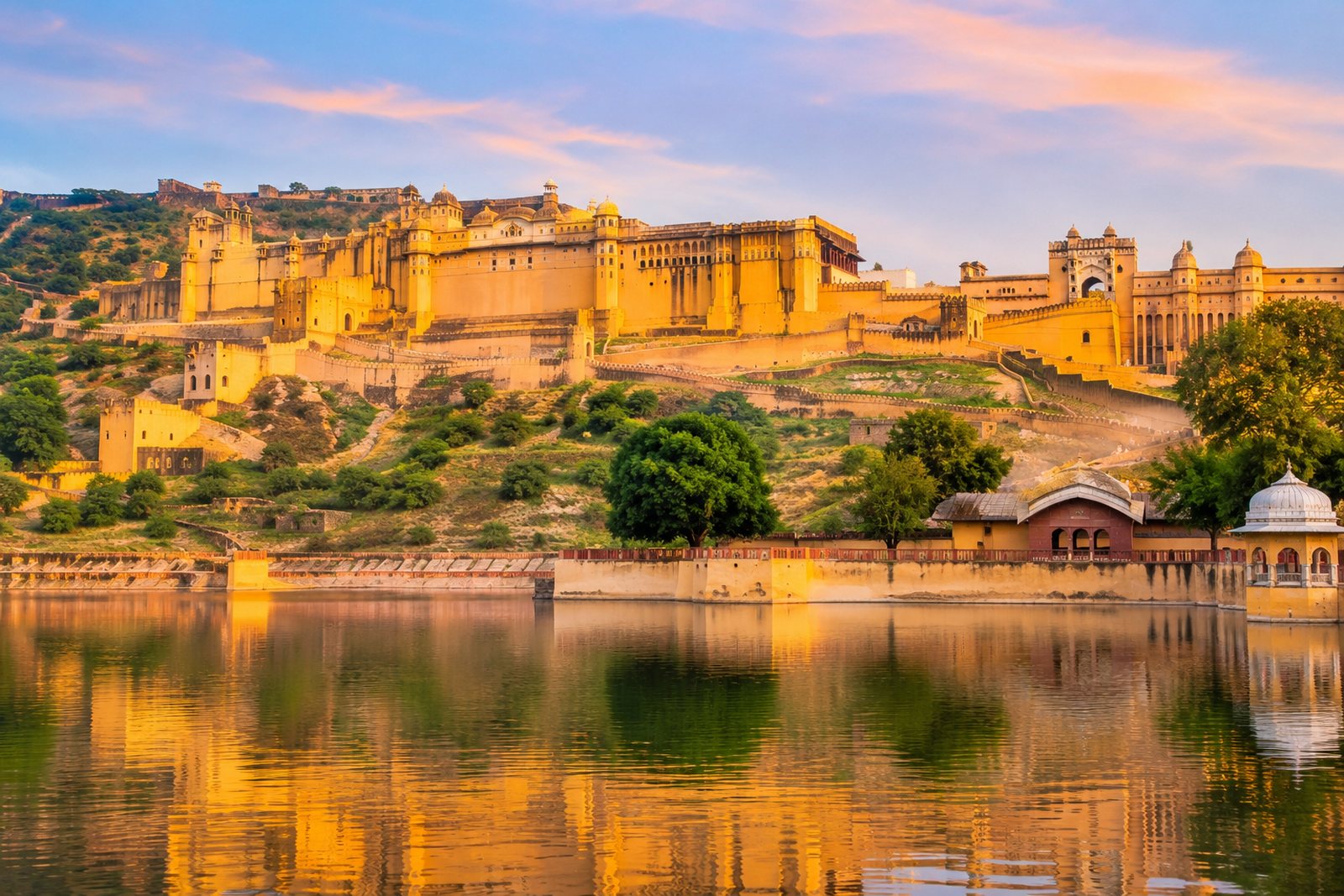
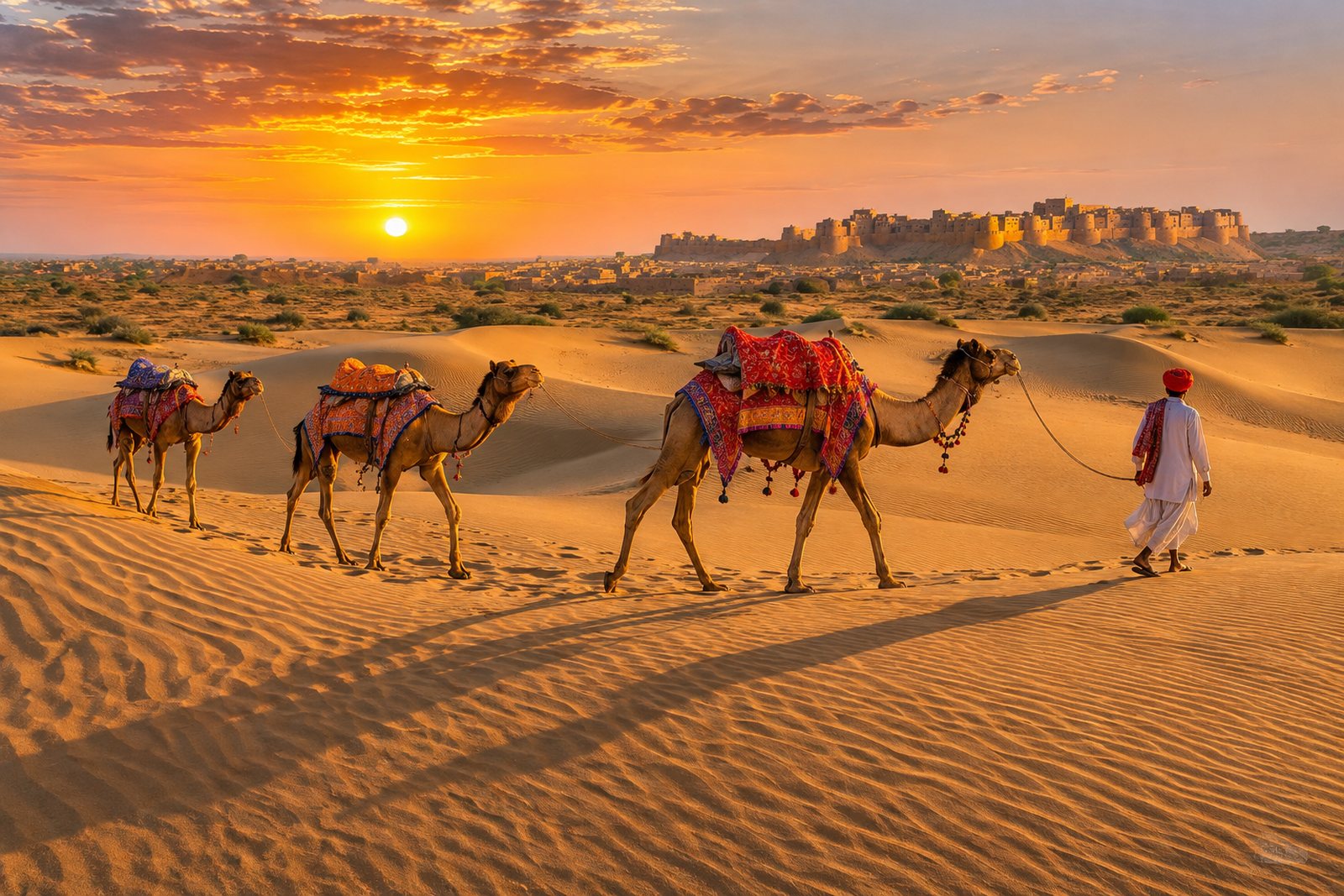
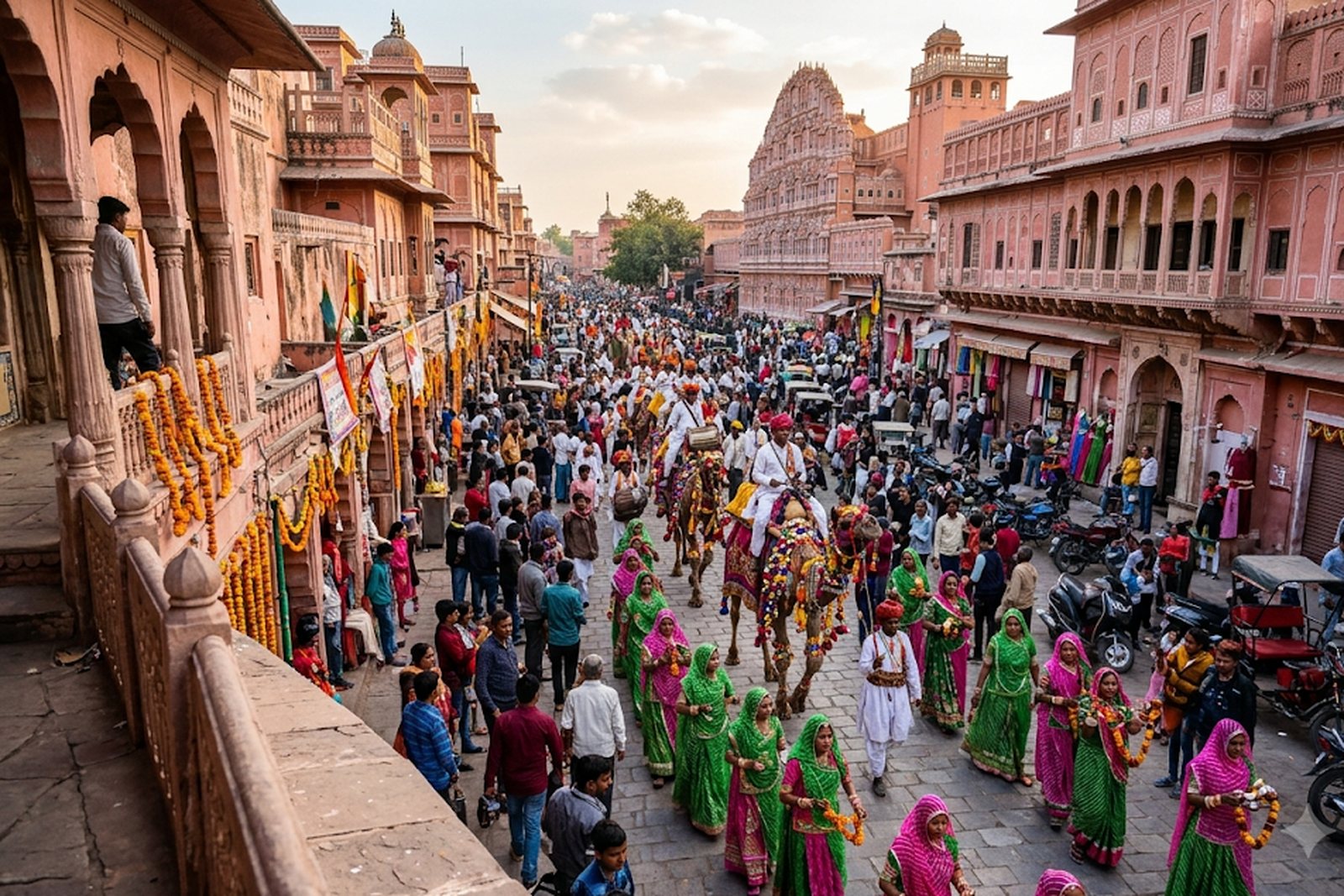
Rajasthan Tour Plan: 4 to 14 Nights of Forts, Desert and Lakes
A practical Rajasthan tour plan with road times, a 7-night Jaipur, Jodhpur, Jaisalmer and Udaipur itinerary, and circuits of 4 to 14 nights from Delhi, Jaipur or Udaipur.
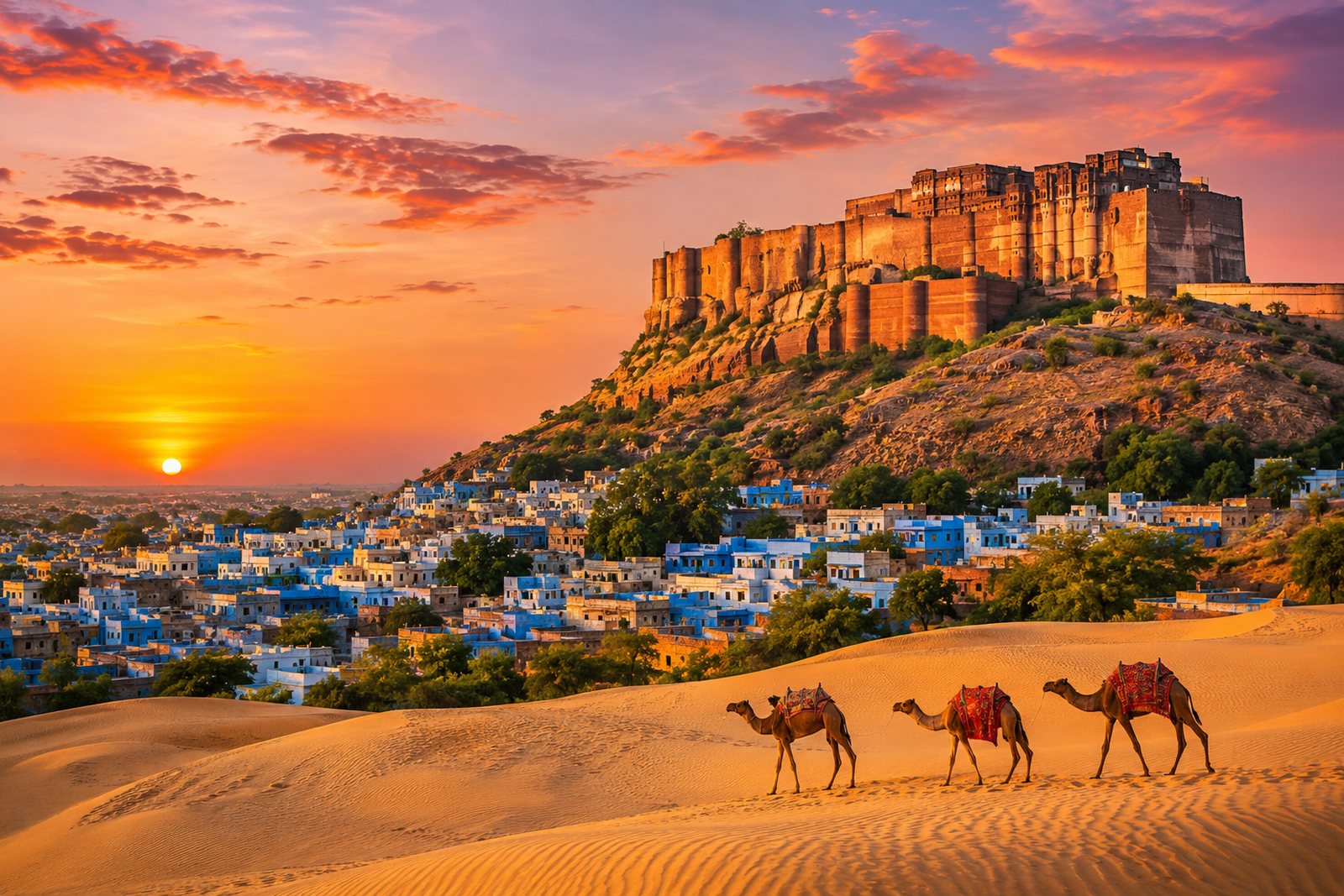
A good Rajasthan tour plan balances forts, desert and lakes without turning the trip into one long drive. Rajasthan is big, and the right route depends on where you land, how many nights you have and whether you want the Sam dunes, a tiger reserve or the Taj Mahal on the way.
How a Rajasthan tour plan works from Delhi, Jaipur or Udaipur
The state has three practical gateways: Jaipur and Udaipur airports, and Delhi for travellers who want to add Agra. Most circuits start in one city and finish in another, so you never drive back the way you came.
Realistic road times between the main stops:
- Delhi to Agra around 3.5 to 4 hours; Agra to Jaipur around 4 to 5 hours
- Jaipur to Jodhpur around 5.5 to 6 hours; Jaipur to Pushkar around 2.5 to 3 hours
- Jaipur to Ranthambore around 3.5 hours; Bikaner to Jaisalmer around 5.5 hours
- Jodhpur to Jaisalmer around 5 hours; Jaisalmer to the Sam dunes around 1 hour
- Jaisalmer to Udaipur around 9 to 10 hours, the longest day on any circuit
- Udaipur to Kumbhalgarh around 2 to 2.5 hours; Udaipur to Mount Abu around 3 to 3.5 hours
As a rule, any Rajasthan tour plan works best with no more than one long drive in a row, followed by a full sightseeing day.
7-night Rajasthan tour plan: Jaipur, Jodhpur, Jaisalmer and Udaipur
This is the route most first-time visitors choose, and it matches our Classic Rajasthan package.
| Day | Plan |
|---|---|
| 1 | Arrive in Jaipur; Hawa Mahal, City Palace, Jantar Mantar and Albert Hall |
| 2 | Amber Fort, Jaigarh and Nahargarh; evening in the bazaars |
| 3 | Drive to Jodhpur; Mehrangarh Fort, Jaswant Thada and Mandore Garden |
| 4 | Drive to Jaisalmer; sunset at Gadisar Lake or the fort walls |
| 5 | Jaisalmer Fort, Jain temples and havelis; afternoon to the Sam dunes for a camel ride, cultural evening and desert camp night |
| 6 | Long drive to Udaipur; evening by Lake Pichola |
| 7 | Udaipur full-day sightseeing: City Palace, Jagdish Temple, Saheliyon Ki Bari and Fateh Sagar |
| 8 | Drop at Udaipur airport |
The Classic Rajasthan package runs this route with a private vehicle and driver, breakfast and dinner every day and one night in a desert camp.
Which BellaSafar package suits you
| Package | Nights | Route | Best for |
|---|---|---|---|
| Classic Rajasthan / Classic Rajasthan (Reverse) | 7 / 7 | Jaipur, Jodhpur, Jaisalmer, desert camp, Udaipur (or the reverse) | First-timers |
| Classic Rajasthan from Delhi | 8 | Agra, then the classic route | Starting from Delhi, adding the Taj |
| Grand Rajasthan | 9 | Jaipur, Pushkar, Jodhpur, Jaisalmer, Udaipur, Kumbhalgarh | Forts and a holy town, no rush |
| Grand Rajasthan from Delhi | 9 | Agra, Jaipur, Bikaner, Jaisalmer, Jodhpur, Udaipur | Delhi start with Bikaner |
| Rajasthan Grand Circle from Delhi | 9 | Jaipur, Pushkar, Udaipur, Jodhpur, Jaisalmer, Bikaner | A full loop from Delhi |
| Royal Rajasthan | 10 | Jaipur, Bikaner, Jaisalmer, Jodhpur, Kumbhalgarh, Udaipur, Mount Abu | Adding a hill station |
| Complete Rajasthan from Jaipur | 11 | Jaipur to Jaipur via the desert, Udaipur and Pushkar | Round trip from Jaipur |
| Rajasthan Ultimate / Complete Rajasthan from Delhi | 12 / 12 | Jaipur, Ranthambore, Pushkar, Bikaner, Jaisalmer, Jodhpur, Kumbhalgarh, Udaipur | Two weeks off, slow travellers |
| Complete Rajasthan with Taj Mahal | 14 | Agra plus every major stop and Mount Abu | The longest, most complete trip |
| Rajasthan with Ranthambore | 7 | Jaipur, Ranthambore, Pushkar, Udaipur | Wildlife lovers, no desert drive |
| Royal Rajasthan Express / Jaipur & Udaipur Romance | 4 / 4 | Jaipur, Jodhpur, Udaipur / Jaipur and Udaipur | Short breaks and honeymooners |
| Jaipur Jodhpur Udaipur / Rajasthan Temple Circuit | 6 / 5 | Three royal cities / Jaipur, Pushkar, Udaipur with Nathdwara | Families, pilgrims, senior citizens |
Places to visit in Rajasthan, city by city
Jaipur
Give Jaipur two full days. One day goes to Amber Fort and the hill forts of Jaigarh and Nahargarh, the other to the old Pink City: Hawa Mahal, City Palace, Jantar Mantar and Albert Hall. Jal Mahal is a quick photo stop.
Jodhpur
Mehrangarh Fort is the highlight, with blue houses spread below its walls. Jaswant Thada and Mandore Garden fill the rest of the day. One night is enough for most people.
Jaisalmer and the Sam dunes
Jaisalmer Fort is still lived in, with Jain temples and lanes inside. Patwon Ki Haveli is the best of the carved havelis. The desert camp at Sam includes a camel ride and a folk music evening.
Udaipur
Udaipur is the slowest, most relaxed stop: City Palace, Jagdish Temple, Saheliyon Ki Bari, Fateh Sagar and sunset at Sajjangarh Monsoon Palace. A boat on Lake Pichola is optional.
Pushkar, Bikaner, Kumbhalgarh, Ranthambore and Mount Abu
Pushkar has the Brahma Temple and lake ghats; dress modestly and avoid paying "priests" who approach you on the ghats. Bikaner has Junagarh Fort and the Rampuria Havelis. Kumbhalgarh's fort wall runs for kilometres over the Aravallis. Ranthambore plans cover the fort and Trinetra Ganesh Temple; park safaris are optional and must be booked in advance. Mount Abu has the Dilwara Temples and Nakki Lake.
Best time to visit Rajasthan
- October to March is the main season, with warm days and cool nights. December and January nights in the desert can be close to freezing.
- April to June is very hot, often above 40 degrees in the desert. Plan only if you must, and sightsee early and late.
- July to September brings some rain and green hills around Udaipur and Mount Abu, but humidity is high and Ranthambore's core zones close for the monsoon.
Diwali, Christmas and New Year are peak weeks with higher demand. The Pushkar fair (usually October or November) fills every room in town.
Rajasthan tour cost: what changes the budget
- Number of nights and cities. Each extra city adds hotel nights and driving days.
- Starting point. Delhi starts add an Agra night and longer drives.
- Hotel category. Heritage havelis and lake-view rooms in Udaipur cost more than standard city hotels.
- Desert camp type. Swiss tents with attached bathrooms vary widely in comfort.
- Vehicle. Sedan, SUV or tempo traveller, based on group size.
- Season. Diwali, Christmas, New Year and the Pushkar fair are the costliest dates.
- Paid extras. Monument entry tickets, Ranthambore safaris and the Pichola boat are usually extra.
Rajasthan travel tips for families and couples
- Carry sunglasses, a cap and sunscreen in every season, and a warm jacket for desert nights in winter.
- Drink plenty of water on long drives; the dry air dehydrates you faster than you think.
- Dress modestly at temples, and remove shoes where asked.
- Bargain politely in bazaars and agree on prices for camel rides before you start.
- Monument timings, safari bookings and entry rules change, so check them close to travel.
For other lengths and starting cities, see all Jaipur holiday packages.
Frequently asked questions
How many days are enough for a Rajasthan trip?
Seven nights is enough for Jaipur, Jodhpur, Jaisalmer with a desert camp, and Udaipur. With 10 to 14 nights you can add Pushkar, Bikaner, Ranthambore, Kumbhalgarh and Mount Abu at a slower pace.
What is the best month to visit Rajasthan?
November to February is the most comfortable, with pleasant days and cool nights. October and March are also good, while April to June is very hot.
Should I start a Rajasthan tour from Jaipur or Udaipur?
Either works, because the classic route is a one-way line between the two airports. Choose the city with the better flight for you, or start from Delhi if you also want to see Agra.
Is a desert camp stay in Jaisalmer worth it?
Yes for most travellers, as the camel ride, folk evening and night sky at the Sam dunes are a highlight. Families with small children should pick a camp with attached bathrooms.
Is Rajasthan good for a family trip with elderly parents?
Yes, if you choose a plan with fewer long drives, such as Jaipur, Jodhpur and Udaipur. Forts involve ramps and steps, so allow rest breaks and use lifts or vehicles where available.