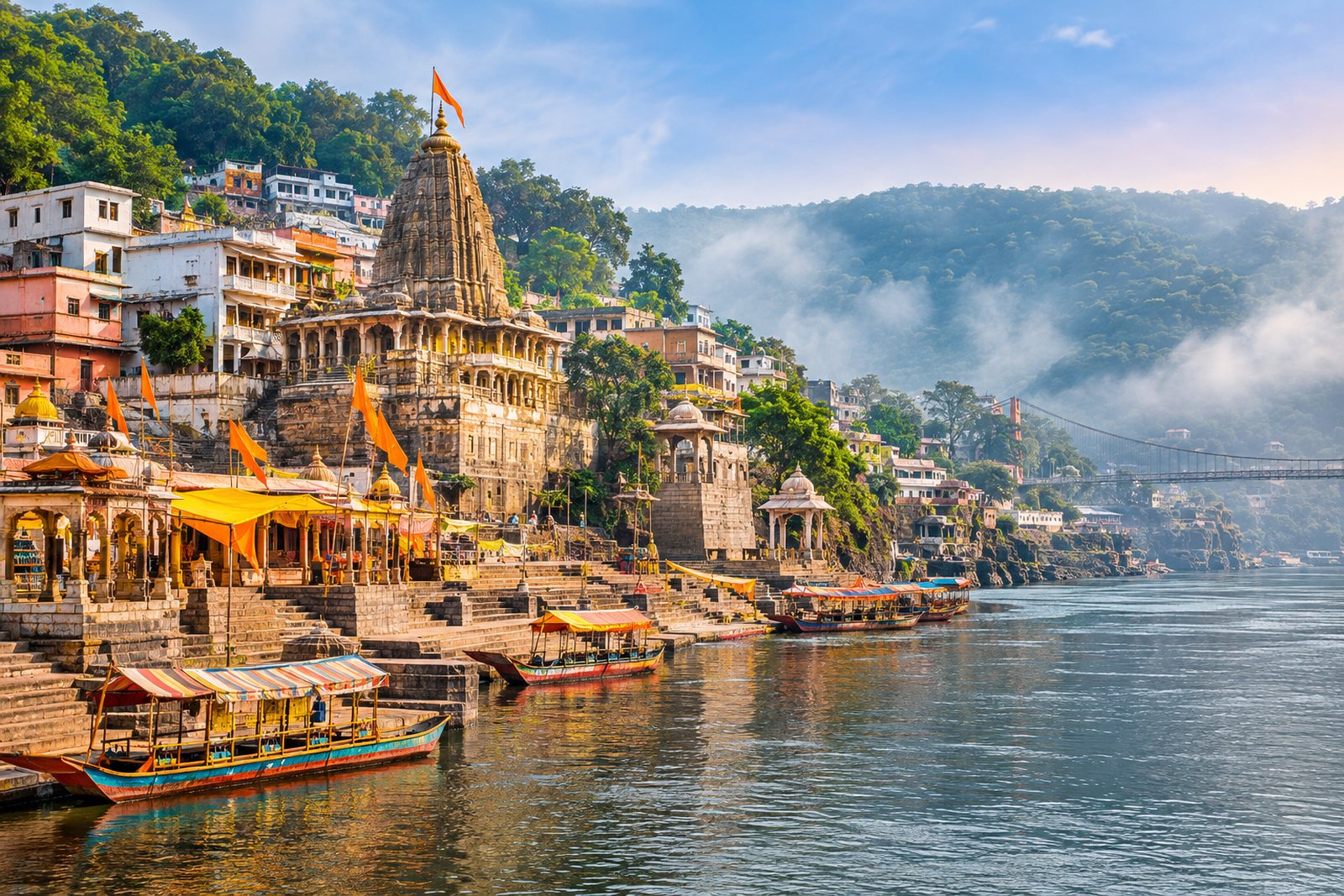
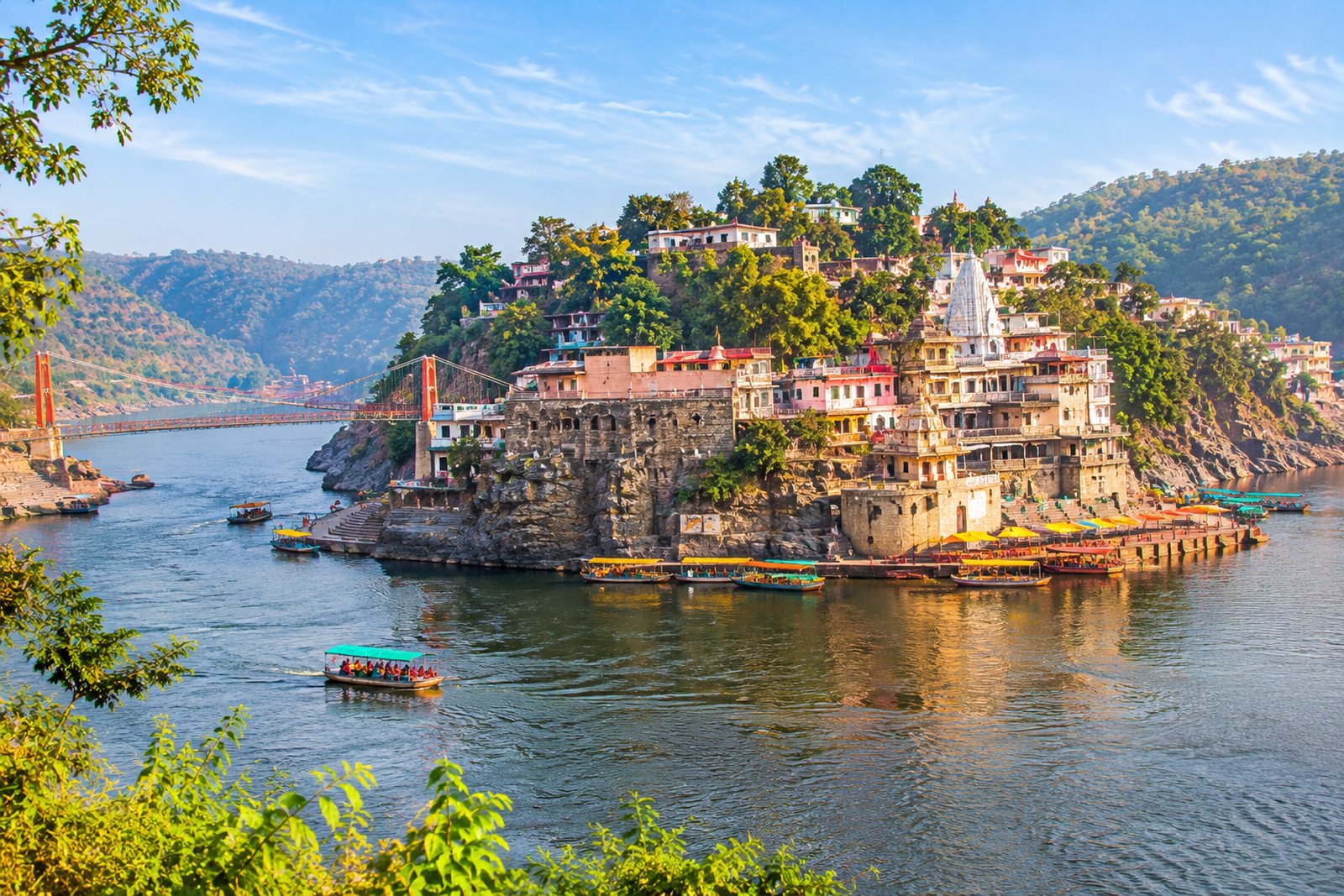
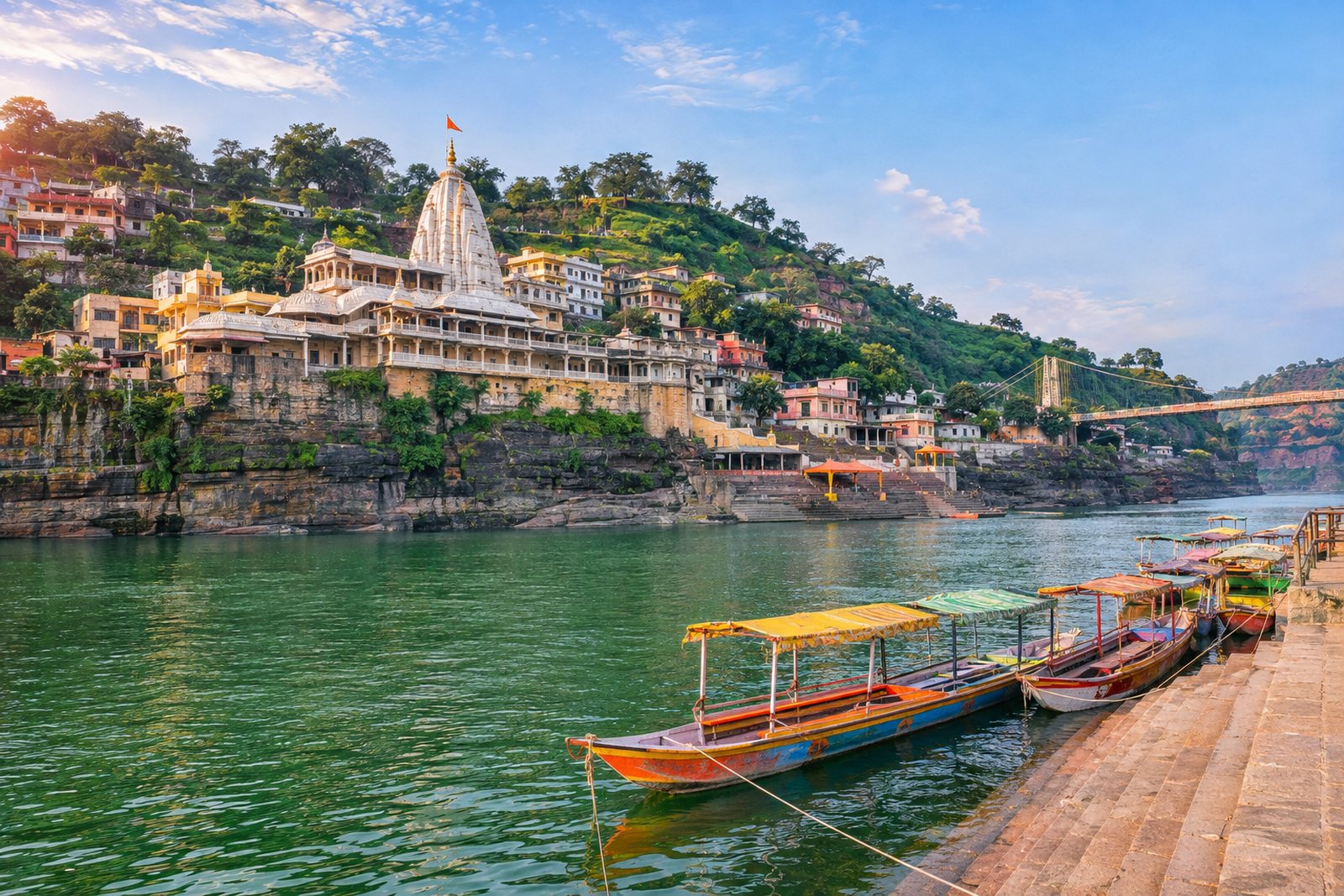
Mamleshwar Temple Omkareshwar: The Other Half of the Jyotirlinga
Across the Narmada from the Om-shaped island stands Mamleshwar, where many pilgrims complete their Omkareshwar darshan. Its story, and how to visit.
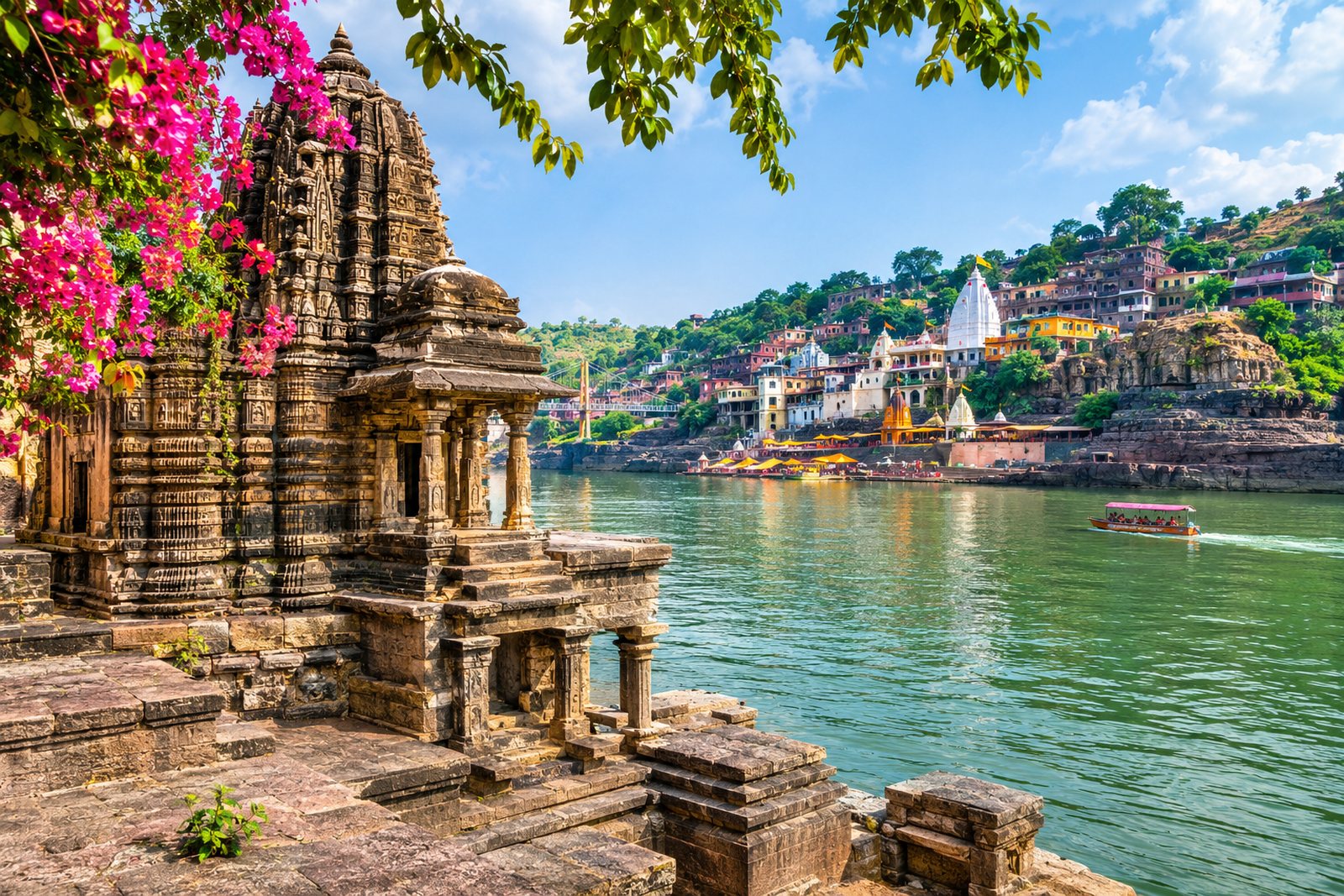
Half the people who come to Omkareshwar go home thinking they have finished the darshan. Ask an old purohit on the ghat, and he will smile and point across the water. "Abhi aadha hua hai." Only half done.
He is pointing at Mamleshwar temple, the quieter stone shrine on the southern bank of the Narmada, which tradition treats as the other half of the Omkareshwar jyotirlinga. Here is why, and how to include it in your yatra.
Two temples, one jyotirlinga
The Dwadasha Jyotirlinga Stotram has a short line for this place: "Omkaram Amaleshwaram". Omkar, and Amaleshwar. Two names, one jyotirlinga.
On the ground, that means two temples facing each other. Omkareshwar stands on Mandhata island, the island in the Narmada that is shaped like Om when seen from above. Mamleshwar, the popular name of Amaleshwar, stands on the mainland bank opposite. Tradition holds that the divine light is present in both, so a pilgrimage here is considered complete only after darshan at both.
We have told the story of the island temple in our Omkareshwar Jyotirlinga history. This piece is about the other bank.
The legend: Vindhya's long penance
According to the Shiva Purana, the Vindhya mountain once felt small beside the fame of Mount Meru. To gain greatness, Vindhya worshipped Shiva here on the banks of the Narmada for a long time. Pleased, Shiva appeared and granted a boon.
Local tradition adds a detail that devotees love. The jyotirlinga that appeared here is said to have taken two forms, one as Omkareshwar and one as Amaleshwar, so that the bhakts on both sides of the river would have their Mahadev. It is told as a legend, and it explains, in the simplest way, why the two temples go together.
An old stone temple by the water
The Omkareshwar temple on the island is busy: queues, bells, flower sellers, steep steps. Mamleshwar feels different. It is an older stone temple, with carved walls and a low, solid shikhar, standing in a compound with a few smaller shrines around it. It is a protected monument, and you can feel its age in the worn edges of the stone.
The crowds here are usually thinner. You may find a family doing a quiet abhishek, a sadhu sitting in the shade, a schoolboy ringing the bell twice because once was not enough.
Did you know? Many devotees do a parikrama of Mandhata island on foot, a walk of a few kilometres around the Om-shaped hill, passing ghats, small shrines and views of both temples along the way.
Crossing the Narmada
Getting between the two temples is part of the experience. You can walk across one of the bridges over the river, with the Narmada green and wide below you and monkeys watching your prasad bag with great interest. Or you can take a boat from the ghats, which gives you the best view of the island temples rising from the rock.
Either way, the crossing is short. Ten or fifteen minutes on foot, less by boat if the queue at the ghat is kind to you.
Nearby: Ekatma Dham and the Narmada ghats
Up on Mandhata hill, the Statue of Oneness, a tall statue of Adi Shankaracharya, was inaugurated in 2023 as part of the Ekatma Dham project. Tradition holds that the young Shankara met his guru on the banks of the Narmada at Omkareshwar.
Evenings bring the Narmada aarti on the ghats, with lamps floating on the water. And Maheshwar, Ahilyabai Holkar's riverside capital, is around an hour and a half away by road.
Our Jyotirlinga Darshan trip uses Indore as the base for Ujjain and Omkareshwar in three nights, as per the package itinerary; keep time on the Omkareshwar day to cross over to Mamleshwar. Malwa Darshan adds Maheshwar, and Heart of Madhya Pradesh goes on to Mandu, Bhopal and Sanchi, as per each package itinerary.
How to plan your Mamleshwar darshan
- Where: on the southern bank of the Narmada at Omkareshwar, roughly 75 to 80 km from Indore, around two hours by road.
- Order of darshan: customs differ. Ask your purohit or simply do both on the same day.
- Timings and rules: darshan hours, abhishek bookings and queue rules change. Check with the temple management locally.
- Best time: October to March. Shravan Mondays and Mahashivratri bring very large crowds.
- Footwear: you will walk barefoot on stone in places. Mornings are kinder to your feet.
- For elderly parents: the bridges and ghat steps take effort. Plan rest stops and avoid the midday heat.
Our tip: Do the island temple early, cross over to Mamleshwar while the morning is still cool, and sit for a few minutes on the steps before you leave. It is the calmest moment of the whole yatra.
The half that completes the whole
There is something very Indian about a pilgrimage that is not finished until you cross the river. One temple loud, one quiet. One on the island, one on the bank. Together, they make Omkareshwar whole.
Planning the yatra? Read our Jyotirlinga Darshan day-by-day plan, see all 12 Jyotirlingas, or browse all Omkareshwar holiday packages.
Frequently asked questions
What is Mamleshwar temple?
Mamleshwar, also called Amaleshwar, is an old Shiva temple on the southern bank of the Narmada at Omkareshwar, facing the island temple of Omkareshwar.
Is Mamleshwar a jyotirlinga?
Tradition treats Omkareshwar and Mamleshwar together as one jyotirlinga, following the stotram line Omkaram Amaleshwaram, so many pilgrims do darshan at both.
Which should I visit first, Omkareshwar or Mamleshwar?
Families and purohits follow different customs on the order. What matters to most devotees is completing darshan at both on the same visit.
How do I go from Omkareshwar to Mamleshwar?
You can walk across one of the bridges over the Narmada or take a boat from the ghats. The crossing is short.
How far is Omkareshwar from Indore?
Omkareshwar is roughly 75 to 80 km from Indore, usually around two hours by road, and is often paired with Ujjain and Maheshwar.