Kharchi Puja Tripura: The Festival of Fourteen Gods
Every July, Old Agartala honours Tripura's fourteen deities in a week-long festival. What Kharchi Puja is, what you will see and how to plan a visit.
Fourteen gods, and only their heads.
That is the first thing that surprises visitors at Kharchi Puja in Tripura. The Chaturdasha Devata, the fourteen deities of Old Agartala, are worshipped in a form unlike the full idols most of us grew up with. And once a year, in the wet green heat of July, they are carried out, bathed in the river and returned to their temple, while the whole region turns up for a week of worship and mela.
If you have never been to Tripura, this is one of the most local, least touristy festivals you can plan a trip around. Here is what it is, what you will see and how to go.
What is Kharchi Puja?
The name is usually explained as coming from Kokborok, the language of the Tripuri people, and is connected with cleansing the earth. Tradition holds that the earth, like a mother, needs purifying after a period of impurity, and Kharchi Puja is when the fourteen deities are worshipped to wash away sins and bring well-being to the land and its people.
The festival has deep tribal roots and was patronised by the Manikya kings who ruled Tripura for centuries. Today it is a state-level event, and the crowd is a mix of everyone: tribal families in traditional weaves, Bengali households, officials, schoolkids, and the odd surprised tourist like you.
Accounts describe the rituals as led by traditional priests of the Tripuri community, with a chief priest called the Chantai. The finer details are best learnt from people there; ask politely and someone will usually explain with a smile.
Who are the fourteen gods?
The Chaturdasha Devata include deities familiar to many Hindus, such as Shiva, Durga, Vishnu, Lakshmi, Saraswati, Kartik and Ganesh, along with others rooted in local tradition. How each is named and understood can differ between tribal and Puranic traditions, and that blend is part of what makes Tripura's culture its own.
Did you know? Kharchi Puja is followed, roughly two weeks later, by Ker Puja, a quieter ritual during which people in the area traditionally observe restrictions on movement. If you happen to be around, follow local guidance carefully.
What happens during the festival
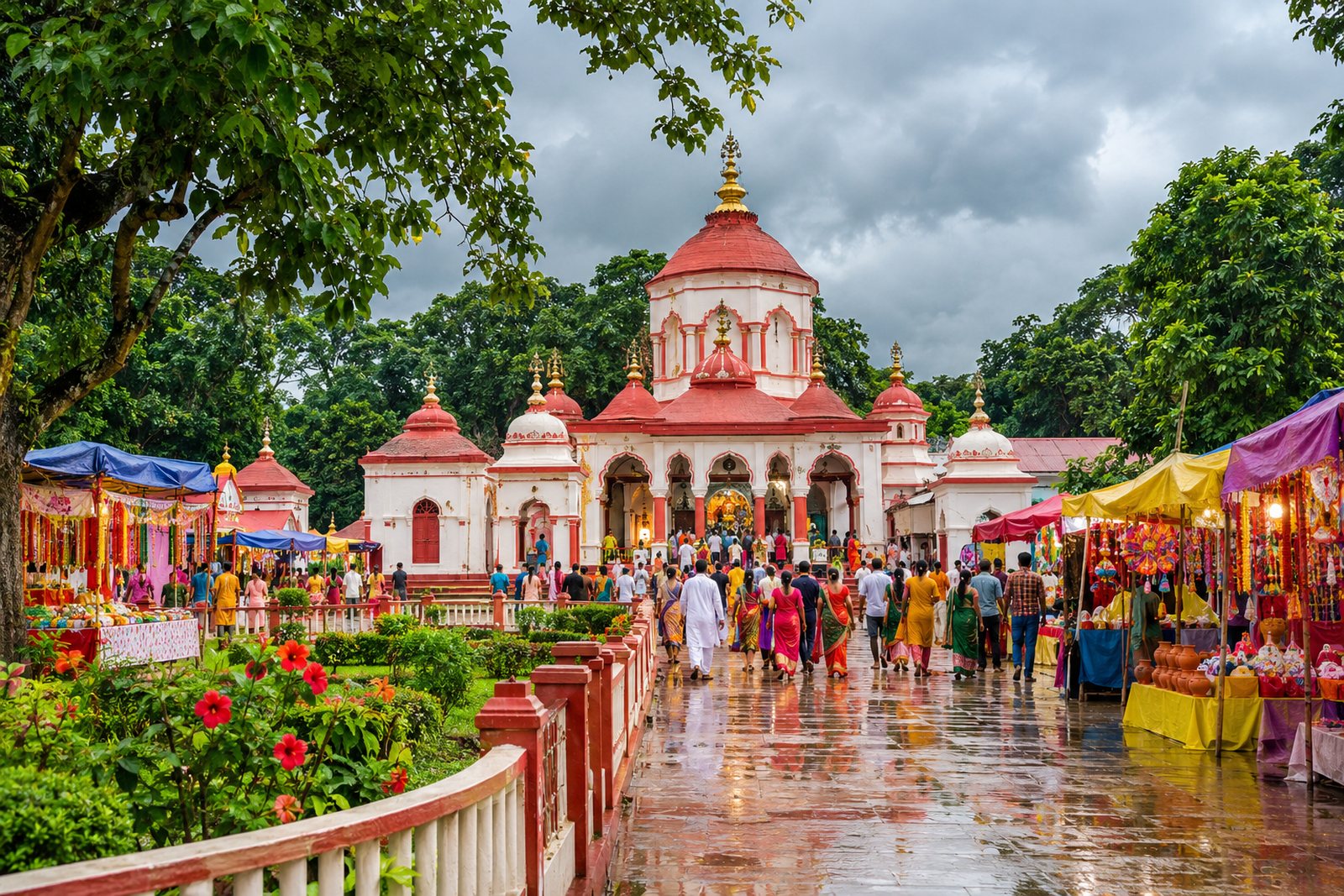
On the first day, the deities are taken in procession to the nearby river for a ritual bath and brought back to the temple. Then comes the week. Puja continues at the temple with offerings of flowers and sweets and, by long tradition, animal sacrifice, which some visitors may find hard to watch. You are free to stay in the fair area instead.
The mela is the part kids remember. Rows of stalls selling bamboo and cane crafts, plastic toys, bangles and handloom risa, the Tripuri woven cloth. Giant wheels creak under a grey sky. Jhal muri and chops come out of hot oil. Cultural programmes fill the evenings with tribal dance and music. It is loud, muddy, crowded and very happy.
When is Kharchi Puja?
Usually July, for around a week. The date follows the traditional calendar and changes every year, so check official Tripura tourism or state announcements before booking flights. Arrive a day before the start if you want to see the opening procession.
Monsoon reality
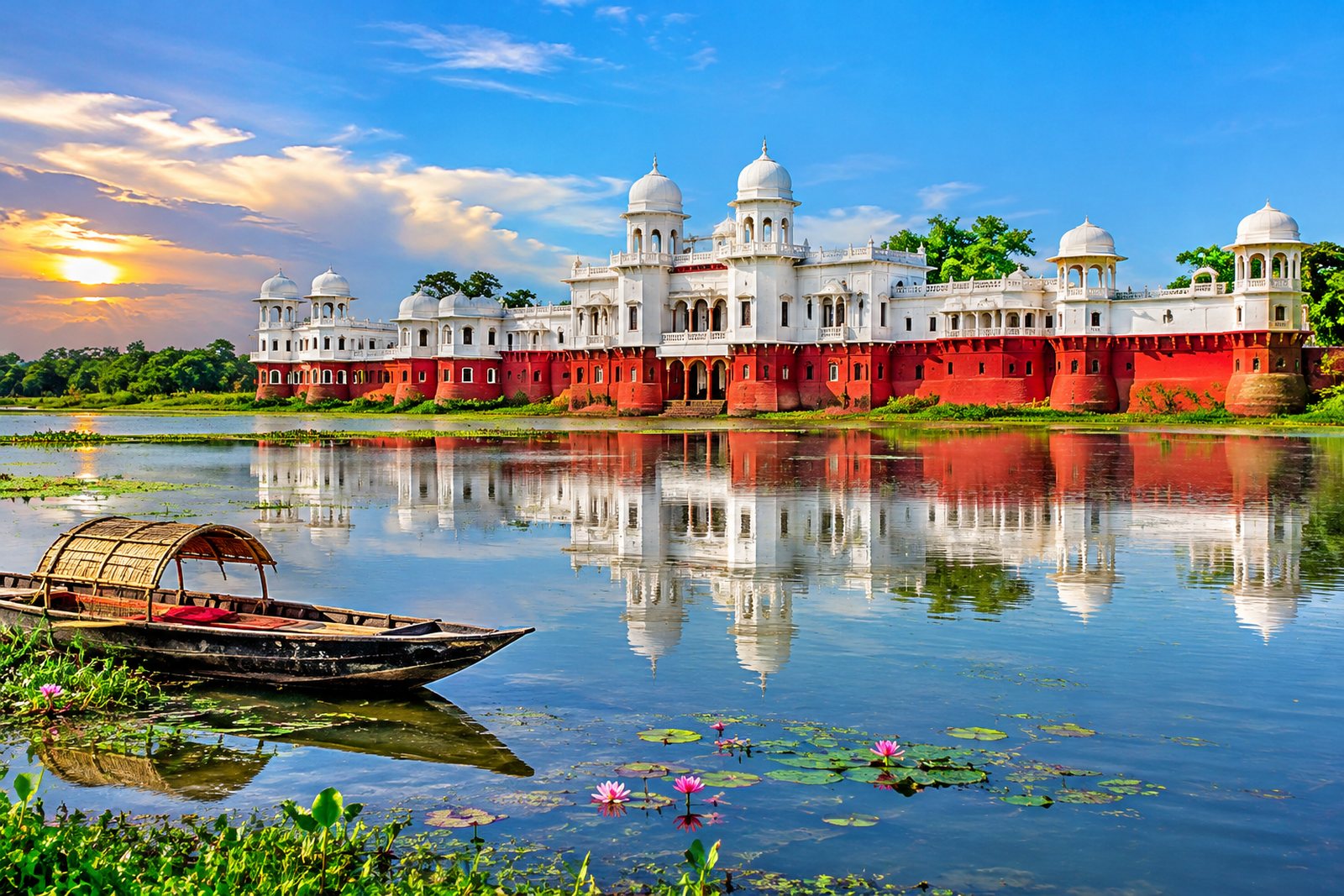
July in Tripura means rain. Not polite drizzle; proper, sky-opening rain, then sunshine, then rain again. The upside is a green you will not forget, shining paddy fields and Rudrasagar lake brimming around Neermahal. The downside is mud at the fair grounds and occasional road delays.
- Carry an umbrella and a light raincoat
- Wear quick-dry clothes and sandals with grip
- Keep phones in a zip pouch
- Mosquito repellent, every evening
- Keep a buffer day for flight or road delays
Combine it with Agartala
Old Agartala is a short drive east of the city, so stay in Agartala and visit the festival as a day outing, coming back each evening.
The Agartala Explorer gives you three nights in Agartala, enough to fit a festival day around the city's main sights as per the package itinerary.
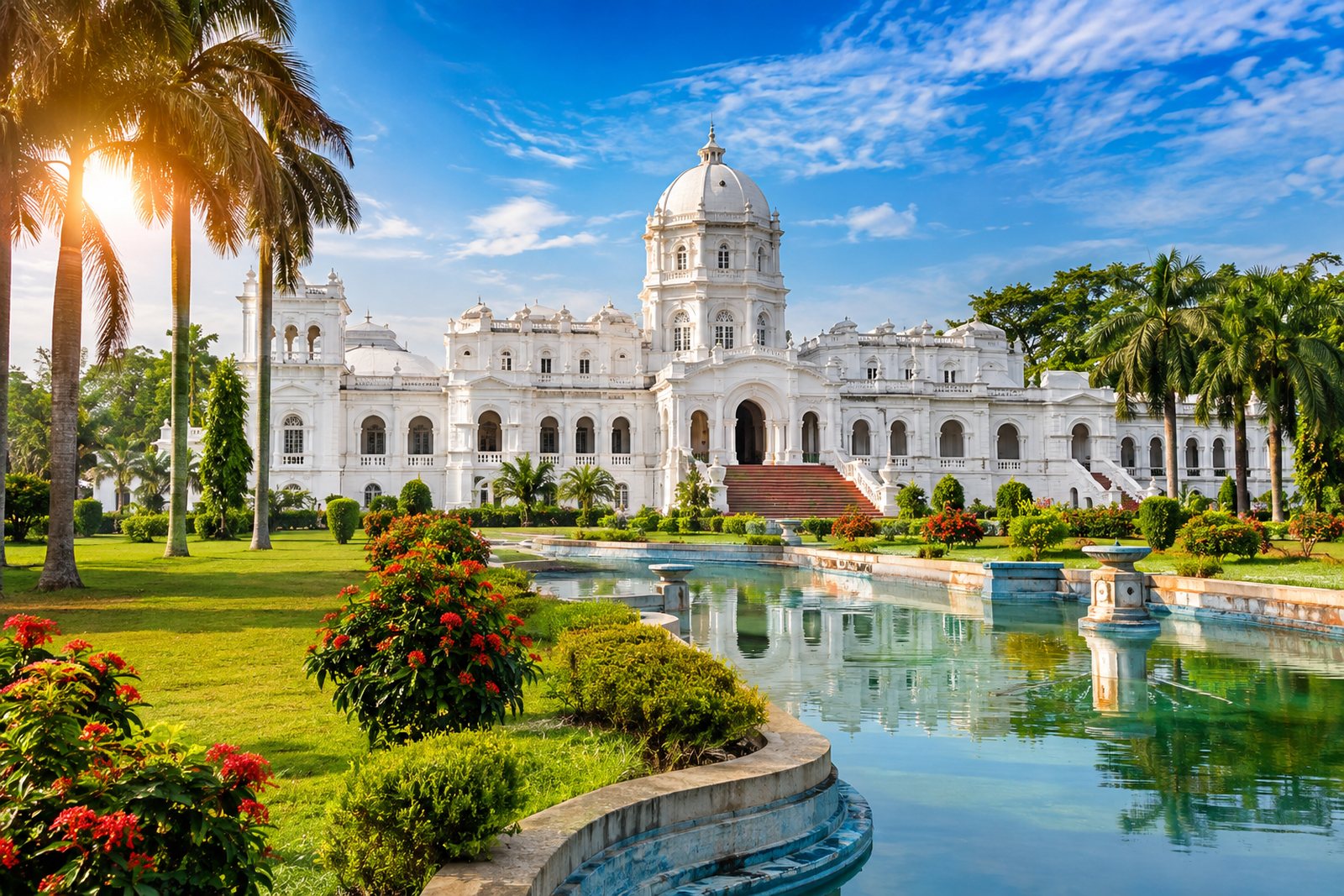
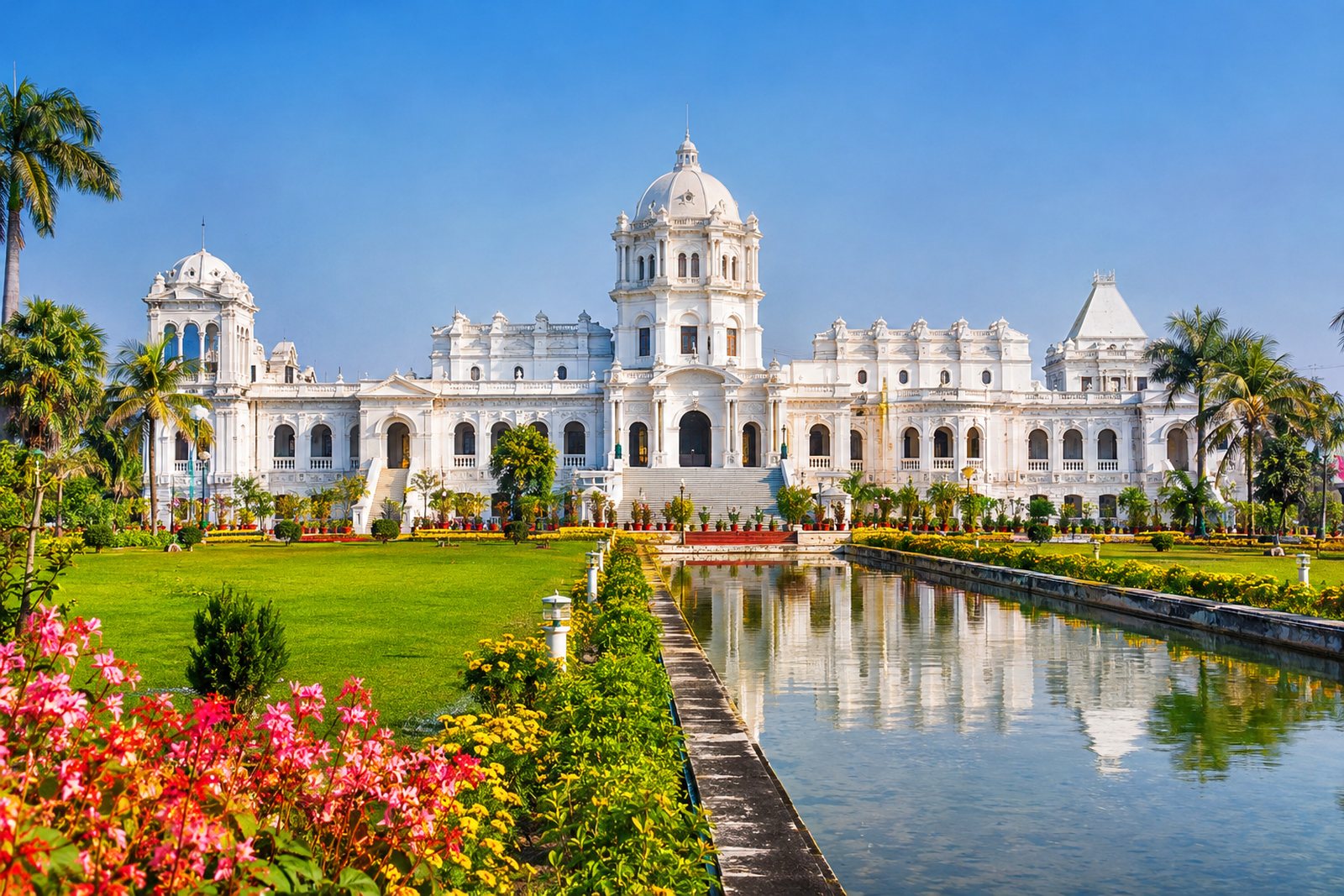
Shorter trip? The Agartala Getaway covers two nights. Either way, round out your days with the white Ujjayanta Palace, the lake palace of Neermahal, and the Tripura Sundari temple at Udaipur, revered as a Shakti Peetha.
Respect at the festival
- Dress modestly and remove footwear where asked
- Ask before photographing priests, rituals or families
- Do not touch offerings or temple objects
- Follow police and volunteer instructions in crowds
- Rules and timings are set locally, so check on the spot
Our tip: Visit the fair on a weekday afternoon for a calmer walk, then come back on a festival evening for the programmes and lights. Same place, two completely different moods.
A festival that belongs to its people
Kharchi Puja is not staged for tourists, and that is exactly its charm. You will be one of many, umbrella in hand, swept along with families who come every single year. Stand quietly near the temple for a while. Watch who comes, what they bring and how they pray. You will leave knowing Tripura a little better than any guidebook could teach you.
Read our Agartala Tripura trip guide or browse all Agartala holiday packages.
Frequently asked questions
What is Kharchi Puja in Tripura?
Kharchi Puja is a traditional festival of Tripura honouring the fourteen deities, the Chaturdasha Devata, at their temple in Old Agartala. It is linked to purifying the earth and is celebrated with rituals and a large fair.
When is Kharchi Puja celebrated?
Kharchi Puja is usually held in July and runs for around a week. Dates follow the traditional calendar and change every year, so check official Tripura tourism or state announcements.
Where is Kharchi Puja held?
The main celebrations take place at the Chaturdasha Devata temple complex in Old Agartala, a short drive east of Agartala city.
Can tourists attend Kharchi Puja?
Yes, the festival and fair are open to visitors, and people from across Tripura attend. Follow the instructions of temple staff, dress modestly and ask before photographing rituals.
What is the weather like in Tripura in July?
July is monsoon season in Tripura, so expect regular rain, humidity and very green surroundings. Carry an umbrella or raincoat and keep some buffer time for road delays.