Ganga Aarti Varanasi: Dashashwamedh vs Assi Ghat
The grand evening aarti at Dashashwamedh or the calm Subah-e-Banaras at Assi? How each Ganga aarti in Varanasi feels, where to watch and who should pick which.
Two scenes, same river, twelve hours apart.
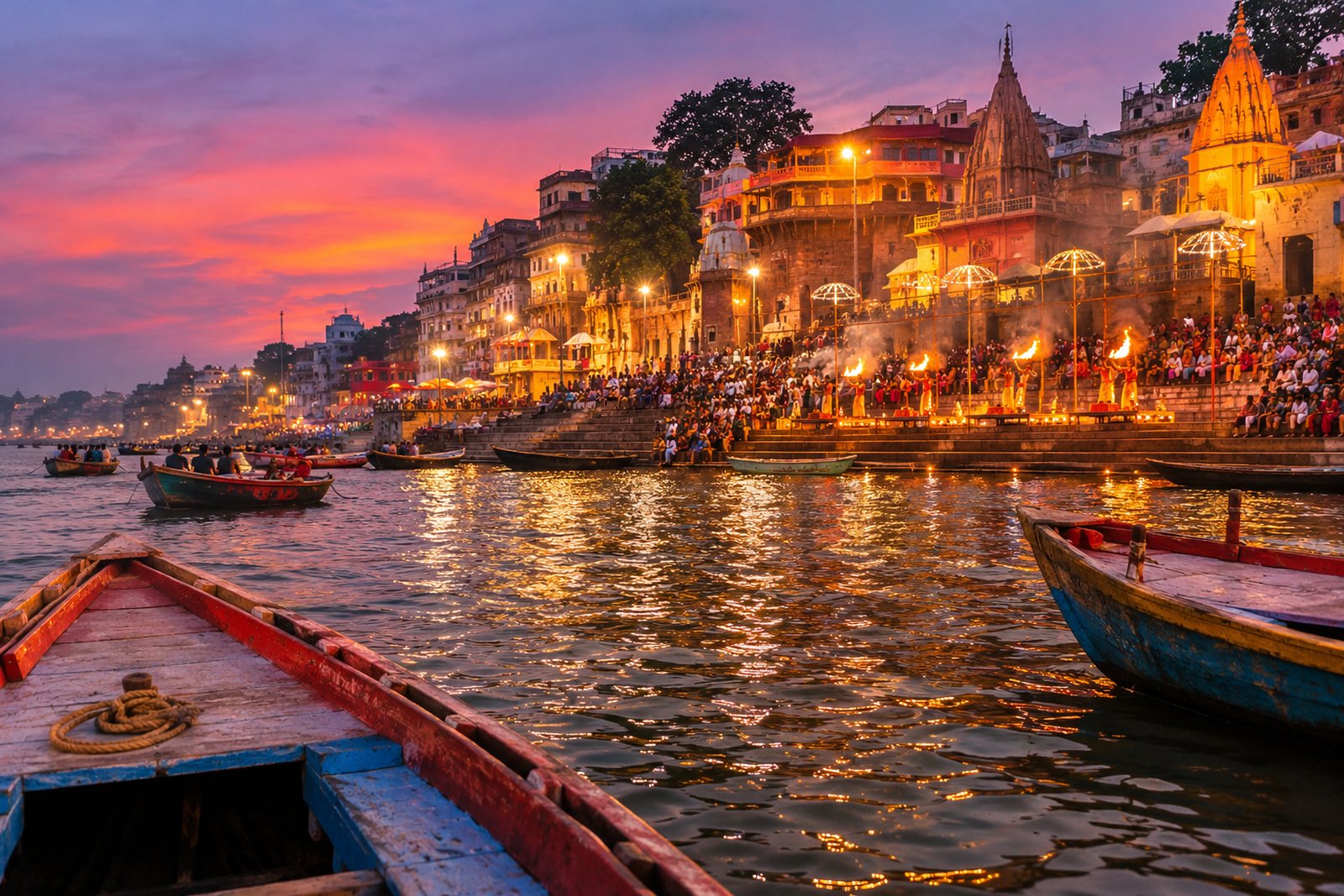
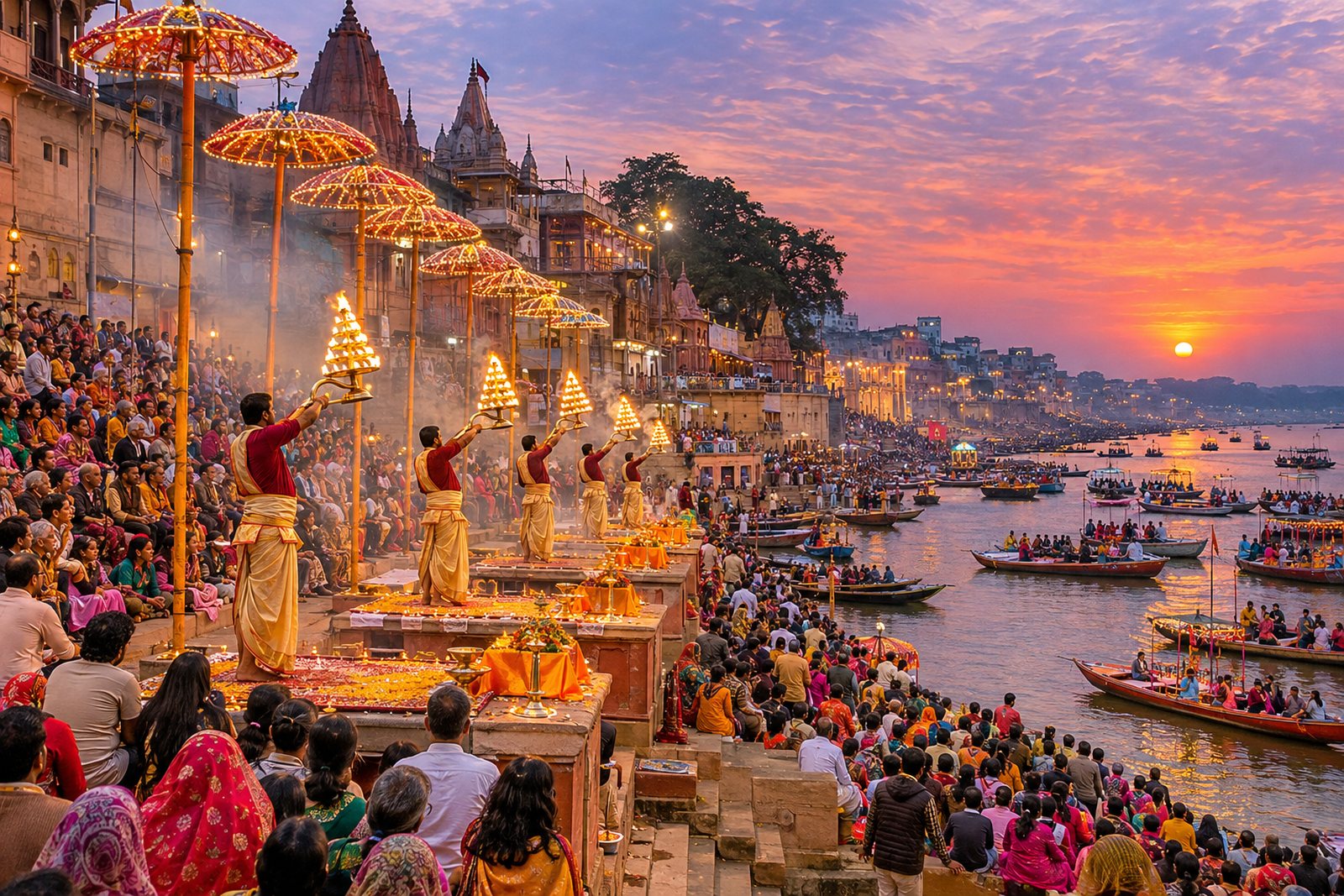
Evening. Dashashwamedh Ghat is packed to the last step. A line of young priests in matching silk stand on wooden platforms facing the Ganga, and when the conch sounds, they lift heavy brass lamps with many flames and swing them in slow circles. Bells clang. Incense smoke drifts over the water, where hundreds of boats have tied up side by side to watch. Somebody's child is asleep on her father's shoulder, a marigold diya still in her fist.
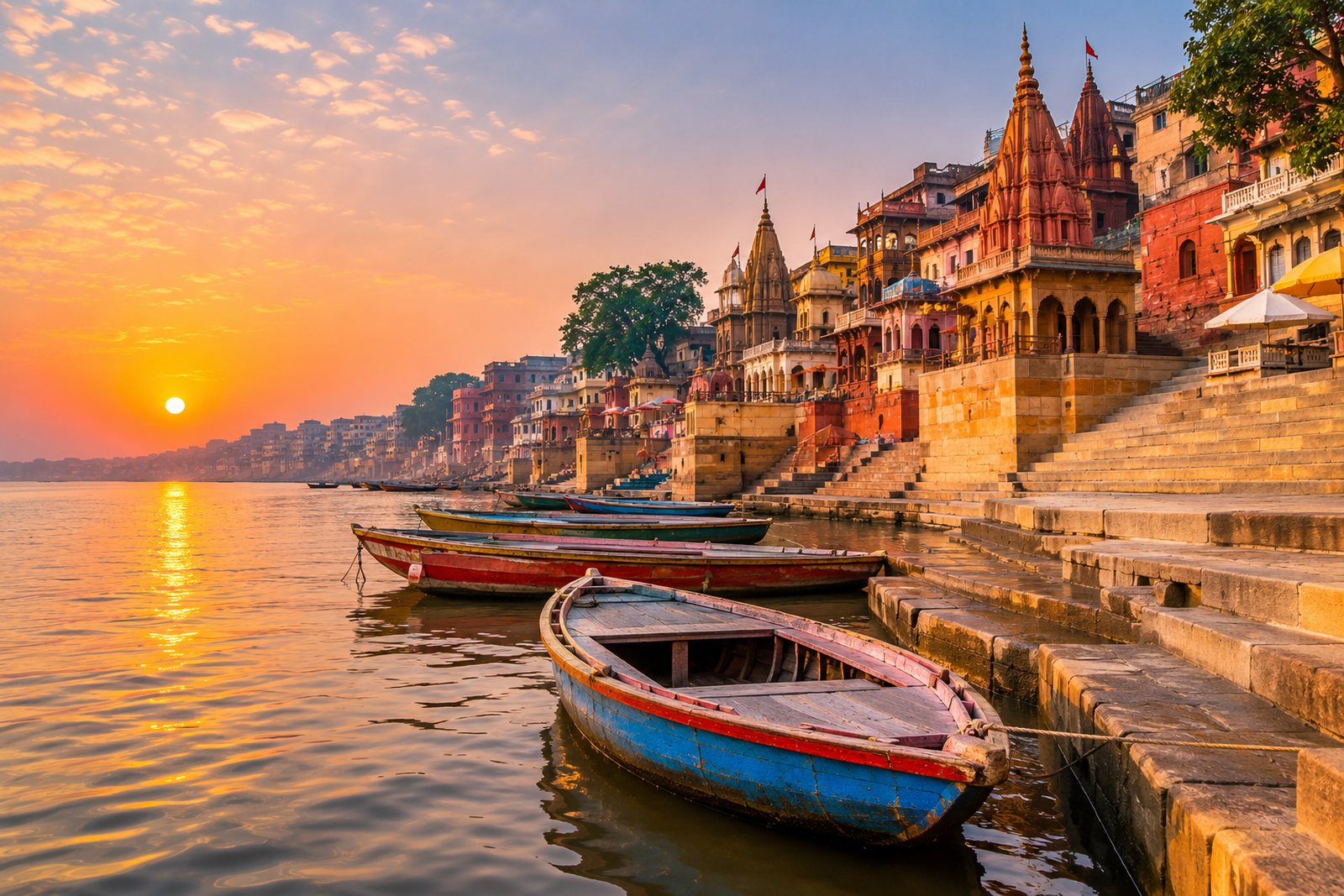
Morning. Assi Ghat, before sunrise. The air is cool and grey-blue. A smaller aarti, Vedic chanting, a few musicians, a handful of people doing yoga on the steps. Boats slide past with their oars dipping. You can actually hear the river.
Both are the Ganga aarti Varanasi is famous for. They just feel completely different. Here is how to see each, and which one suits you.
What is the Ganga aarti in Varanasi?
Aarti is the offering of light. In Varanasi, every evening, the Ganga is worshipped as a mother and a goddess with lamps, flowers, incense, conch shells and chanting. The idea is old; the large, choreographed version you see today at Dashashwamedh has grown over the past few decades into one of the most watched rituals in India.
The evening aarti at Dashashwamedh Ghat
This is the big one. Dashashwamedh is the main ghat near the old city, and the aarti happens every evening around sunset. Exact timing shifts with the season, so check locally on the day.
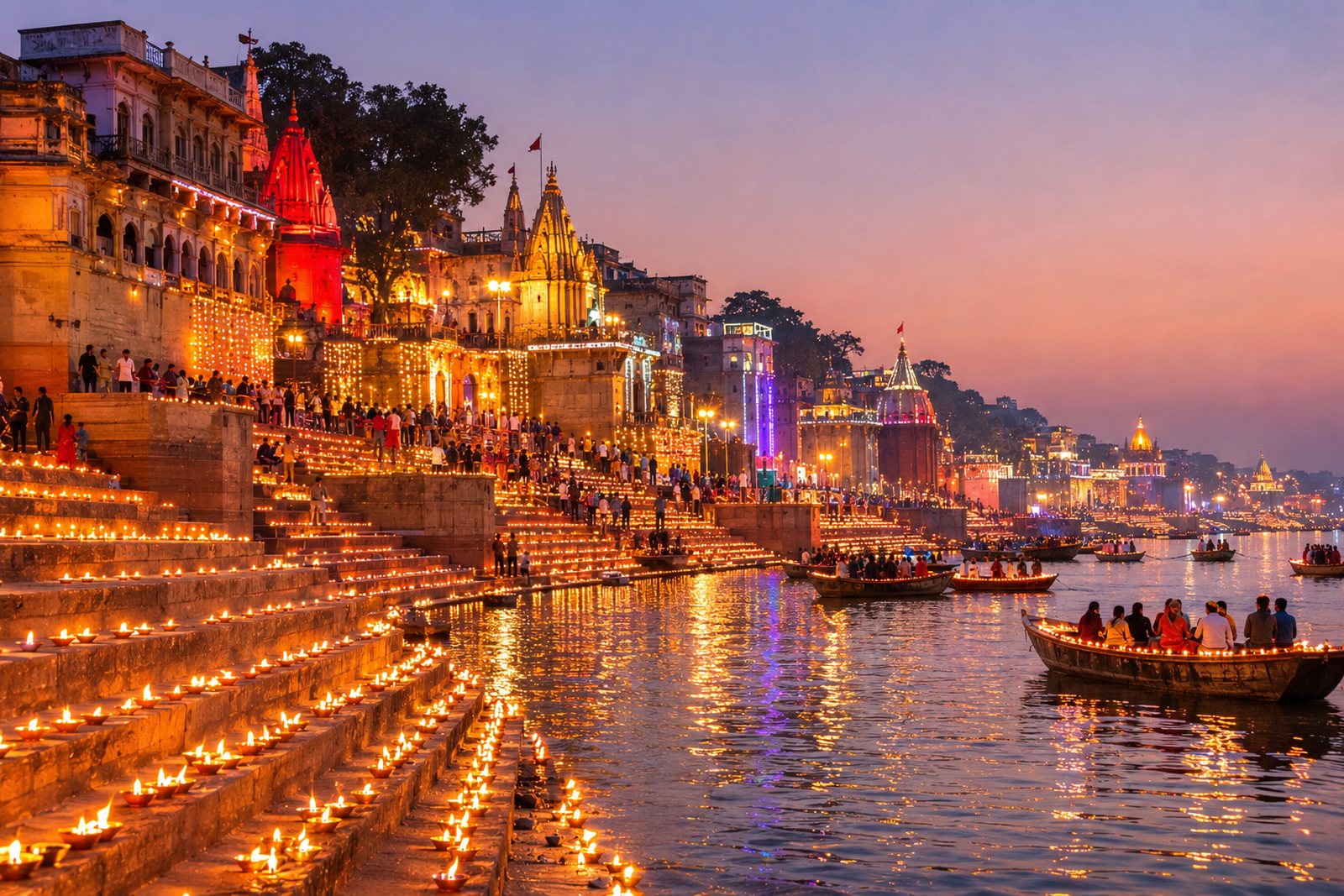
What you will see: a row of priests performing the same movements together, in sync, with lamps, fans, flowers and conch. It is loud, devotional and theatrical in the best sense. The neighbouring ghat also holds its own aarti at the same time, so the whole riverfront seems lit up.
The good: the scale, the energy, the feeling of being in the middle of something huge.
The hard part: the crowd. The steps fill up well before the start, and festival evenings are packed. Families with small children or seniors need a plan.
Where to watch the Dashashwamedh aarti from
- From the steps: reach at least an hour early to sit close. You will be shoulder to shoulder.
- From a boat: many people watch from the river, which gives a front view of the whole line and avoids the crush on the steps. Boat rides are extra and should be booked with licensed boatmen; ask for life jackets.
- From a raised spot: some guesthouses and buildings near the ghat have rooftops or balconies with views. Ask locally.
The morning aarti at Assi Ghat: Subah-e-Banaras
Assi Ghat, at the southern end of the main ghats, has become the place for mornings. Its programme, known as Subah-e-Banaras, typically brings together a sunrise aarti, Vedic chanting, classical music and yoga. It started only some years ago but has quickly become popular with visitors who want a calmer experience.
There is an evening aarti at Assi too, smaller than Dashashwamedh and more relaxed.
The good: space, quiet, sunrise light on the river, and the chance to actually sit and absorb it.
The hard part: the early alarm. You need to be there before dawn.
Dashashwamedh vs Assi: which aarti should you pick?
| Dashashwamedh (evening) | Assi (morning) | |
|---|---|---|
| Feel | Grand, loud, crowded | Calm, musical, reflective |
| Best for | First-timers, big families, photos | Couples, seniors, slow travellers |
| Crowd | Very heavy | Moderate |
| Boat view | Excellent | Lovely at sunrise |
Our honest verdict: if you have two evenings, see Dashashwamedh once and Assi the next morning. If you have only one, first-timers should go to Dashashwamedh. If you have parents who cannot stand long in crowds, Assi's morning is kinder.
Did you know? During the monsoon, when the Ganga rises over the lower steps, the Dashashwamedh aarti is often shifted to higher ground or nearby rooftops rather than being stopped.
Things to do around the aarti
Before the evening aarti, walk along the ghats from Assi towards Dashashwamedh, passing ghats where pujas, cricket, kite flying and boat haggling all happen at once. Watch from a respectful distance at Manikarnika, the cremation ghat, and do not take photos there.
After the aarti, eat in the lanes: kachori-sabzi, malaiyyo in winter, lassi in a kulhad, and a Banarasi paan if you are brave.
Early morning is the best time for a boat ride, with the city waking up on the steps and the light turning gold.
Visiting the Ganga aarti respectfully and safely
- Dress modestly; it is a religious ceremony.
- Keep phones and wallets close in crowds.
- Decide a meeting point with family before the aarti starts.
- Do not climb onto the priests' platforms or block their space for photos.
- Floating a leaf diya is a lovely gesture; buy one from the ghat.
- On big festivals like Dev Deepawali, expect huge crowds and plan very early.
Our tip: For seniors, a boat view is often the most comfortable way to see the Dashashwamedh aarti. Fix the boat earlier in the day so you are not negotiating in the crush.
Our Kashi Vishwanath Darshan package gives you two nights with the temple circuit and Sarnath, leaving evenings free for the aarti. Varanasi Explorer adds a third day with Ramnagar Fort, silk looms and a food trail, as per the package itinerary. Varanasi & Vindhyachal adds a day trip to Vindhyachal and Chunar.
The lamps go out, the boats untie, and the river keeps flowing as it did before any of us came. That is why people return.
For the full trip, read our Varanasi trip plan, or browse all Varanasi holiday packages.
Frequently asked questions
What time is the Ganga aarti in Varanasi?
The evening aarti at Dashashwamedh starts around sunset and the Assi morning programme around sunrise. Timings shift with the season, so check locally.
Which is better, Dashashwamedh or Assi Ghat aarti?
Dashashwamedh is grander and very crowded, best for first-timers. Assi's morning aarti is calmer and suits seniors and couples. Many people see both.
Can I watch the Ganga aarti from a boat?
Yes. Many visitors watch from a boat for a front view. Boat rides are extra; use licensed boatmen and ask for life jackets.
Is the Ganga aarti held during the monsoon?
Yes, but when the river rises it is often shifted to higher steps or nearby rooftops. Check locally during high water.
How early should I reach the Dashashwamedh aarti?
Aim to arrive at least an hour early for a good spot on the steps, and earlier on festivals like Dev Deepawali.