Dubai Souks Guide: Gold Souk, Spice Souk and Abra Ride
Cross Dubai Creek by abra, get lost in the spice lanes of Deira and window-shop the Gold Souk like a pro. Old Dubai, the way Indian families enjoy it.
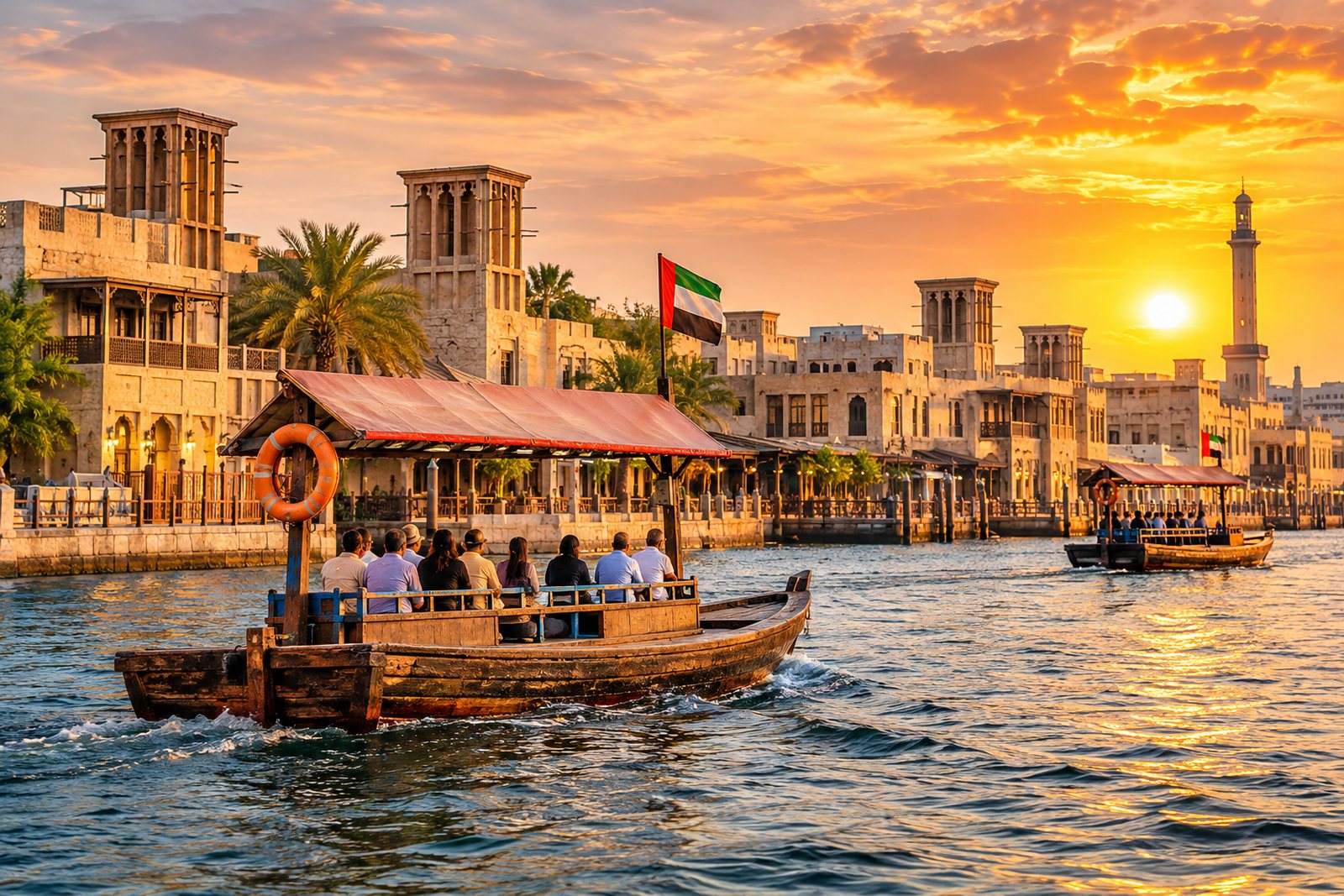
What does Dubai smell like? Most people would guess perfume and new cars. Then they step off a wooden boat on the Deira side of the creek, walk two minutes, and the air is suddenly cardamom, dried lime, saffron and something smoky they cannot name. A shopkeeper holds out a pinch of something. "Try, try. Frankincense."
That is old Dubai, and this Dubai souks guide is about spending an unhurried evening there: the abra ride, the Spice Souk, the Gold Souk, the Perfume lanes and the textile market of Bur Dubai.
Why old Dubai is worth an evening
The glass towers and malls are what everyone posts. But Dubai began on the banks of its creek, as a fishing, pearling and trading settlement, and the old trading districts of Deira and Bur Dubai still run on that same energy. Dhows unload goods, shopkeepers call out in Hindi, Urdu, Malayalam and Arabic, and Indian families feel strangely at home.
Plan this for a cooler evening, from roughly November to March. Summer afternoons here are punishing.
Start in Bur Dubai: Al Fahidi and the Textile Souk
Begin on the Bur Dubai side.
The Al Fahidi Historical Neighbourhood has restored old houses with wind towers, the traditional cooling system that pulled breezes down into rooms before air-conditioning existed. Narrow lanes, sand-coloured walls, small galleries and cafes. It is peaceful in the late afternoon.
A short walk away is the Textile Souk, a covered market with wooden arches and lanes of fabric, scarves, pashminas, kurtas and souvenirs. This is the place for:
- Pashmina-style shawls and scarves
- Kaftans and abayas
- Fridge magnets, mini camels and other souvenirs
Bargain politely. Starting prices often have room.
The abra ride across Dubai Creek
Now the best five minutes of the evening. Walk to the abra station near the Old Souk and board an abra, a small wooden water taxi that has carried people across the creek for generations.
You sit on a bench in the middle, the driver pushes off, and the city slides past at water level: dhows loaded with goods, the Deira skyline, gulls overhead. The fare is a small amount paid in cash, so carry some dirham coins or small notes.
Did you know? For a long time, before bridges and tunnels connected the two sides, the abra was one of the main ways for people to cross Dubai Creek between Bur Dubai and Deira. Many locals still use it daily.
Deira Spice Souk: smell first, buy later
Step off on the Deira side and you are almost in the Spice Souk. Sacks overflow with:
- Saffron in small boxes and jars
- Dried lemons (loomi), cinnamon bark and cardamom
- Frankincense and bakhoor for burning at home
- Dates, dried figs, apricots and nuts
- Arabic coffee and karak chai mixes
Shopkeepers will call you in; it is part of the theatre. Smell, ask, compare. With saffron especially, quality varies a lot, so buy from shops that let you see what you are getting and pack it properly. Remember that India has its own customs rules on carrying food items; check before stuffing your suitcase.
The Gold Souk: how to shop without panic
A few lanes over, the Gold Souk begins. Shop windows glitter with necklaces, bangles, bridal sets and coins. Even if you are not buying, walk through; the window displays are a show in themselves.
If you are buying, keep a cool head:
- Gold rate: Set by weight and purity, and changes daily. Ask for the per-gram rate.
- Making charges: Separate from the gold rate, and often negotiable.
- Purity: Check the hallmark or stamp and the carat.
- Invoice: Always get a proper invoice with weight, purity and price.
- Indian customs: India has limits on how much gold travellers can bring in duty-free, which differ for men and women. Check the latest rules on the official customs website before you buy.
The UAE also runs a VAT refund scheme for tourists on eligible purchases; ask the shop whether your purchase qualifies.
Our tip: Agree among yourselves on a budget before entering the Gold Souk, not inside it. Decisions made under all that shine tend to be expensive.
The Perfume Souk and the oud lanes
Close by is a stretch known as the Perfume Souk, with shops selling attar, oud oil and blended perfumes in decorative bottles. Shopkeepers will put a dab on your wrist, then another, then another. After the fourth, you will not be able to tell them apart.
Tip: smell coffee beans between samples if they offer them, and buy small bottles first.
What to eat around the souks
Old Dubai is full of small eateries with Indian, Pakistani, Iranian and Arabic food. Look for:
- Shawarma rolled hot off the spit
- Karak chai in small cups
- Luqaimat, little fried dough balls drizzled with date syrup
- Kebabs and fresh Arabic bread
Vegetarian Indian food is easy to find in this area, and Jain travellers can usually find something suitable by asking.
Practical things to know
- Timings: Many shops close for a few hours in the afternoon and around Friday prayers. Check locally.
- Dress: Modest, comfortable clothing; shoulders and knees covered is a safe choice.
- Cash: Useful for the abra and small shops; cards work in bigger stores.
- Crowds: Weekend evenings are busiest.
- Kids: Keep hands held in crowded lanes; they are narrow.
Fitting the souks into your Dubai trip
Most Dubai packages are built around big-ticket experiences, and the souks fit best into a free evening or around a city tour.
The Dubai Classic gives you four nights in Dubai with a half-day city tour, Burj Khalifa, a desert safari, a Marina dhow cruise, Miracle Garden and Global Village, as per the package itinerary. Dubai Fun & Adventure swaps in Aquaventure and a dhow cruise on the creek itself. And Dubai Abu Dhabi Explorer adds a day for Abu Dhabi's BAPS Mandir and Grand Mosque over five nights. Ask us to keep one evening free for the souks.
The malls show you what Dubai has become. The souks, with sacks of spice by the creek and an abra rocking under your feet, show you where it came from.
Planning the trip? Read our Dubai itinerary from India or browse all Dubai holiday packages.
Frequently asked questions
How do I take an abra across Dubai Creek?
Walk to an abra station on either bank, such as near the Old Souk in Bur Dubai or near the Spice Souk in Deira, pay a small fare in cash and board the shared boat. The crossing takes only a few minutes.
Is gold cheaper in Dubai than in India?
It can be, depending on the day's rate, making charges and Indian customs duty. Compare the per-gram rate and making charges, get a proper invoice, and check India's current duty-free allowance on the official customs website before buying.
Can I bargain in the Dubai souks?
Yes, bargaining is normal in the Spice, Perfume and textile souks. In the Gold Souk the gold rate is fixed by weight, but making charges are often negotiable.
What is the best time to visit the Dubai souks?
Late afternoon into evening, from November to March, is most pleasant. Many shops close for a few hours in the afternoon and around Friday prayers, so check locally.
What should I buy in the Dubai Spice Souk?
Popular buys are saffron, dates, dried fruits, Arabic coffee, dried lemons, frankincense and spice mixes. Check the quality and packaging, and know India's customs rules on food items.