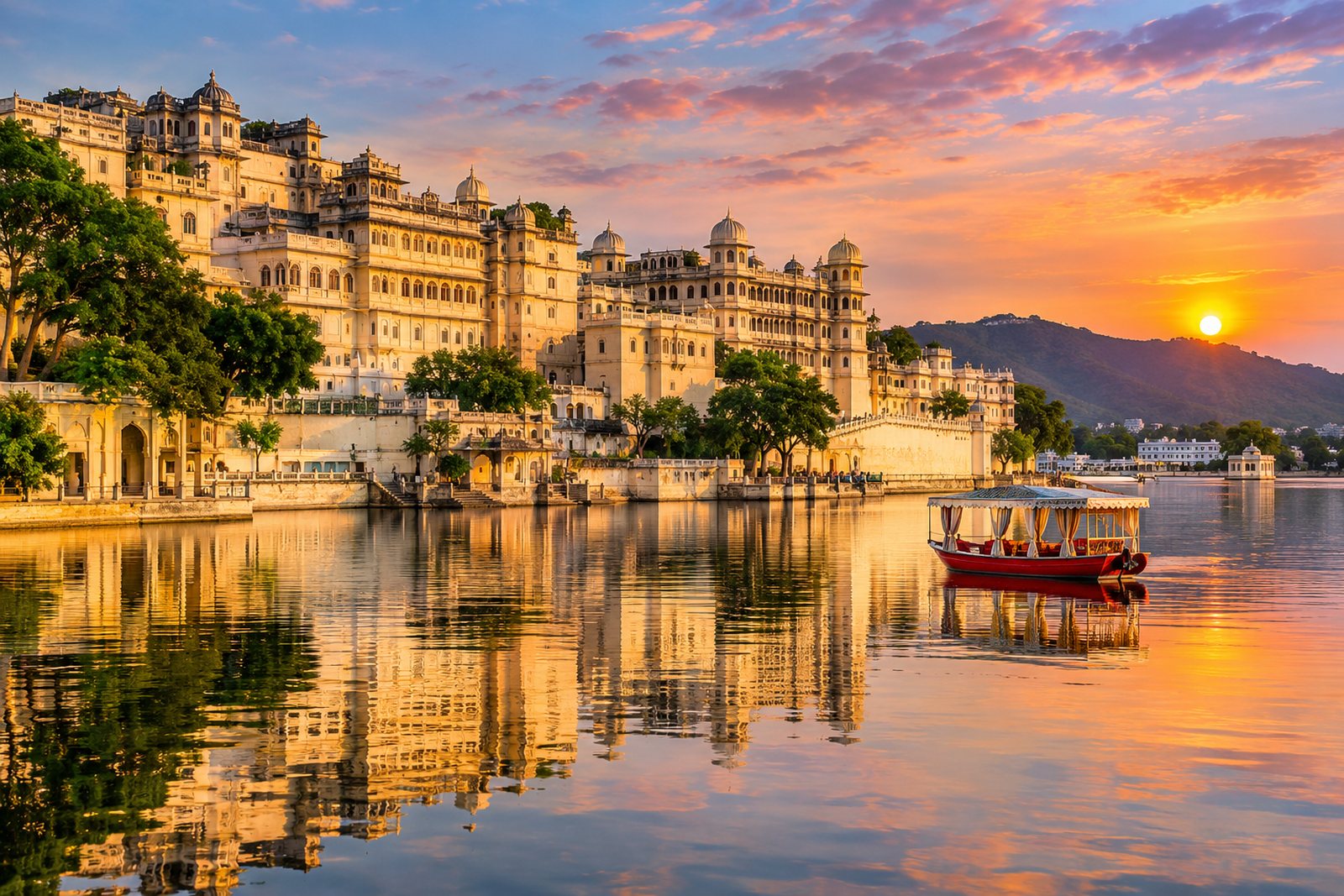
City Palace Udaipur History: 400 Years of Maharanas on Lake Pichola
A king who lost Chittor, a sage on a hilltop and a palace that grew wing by wing for four centuries. The City Palace Udaipur story, and how to see it.
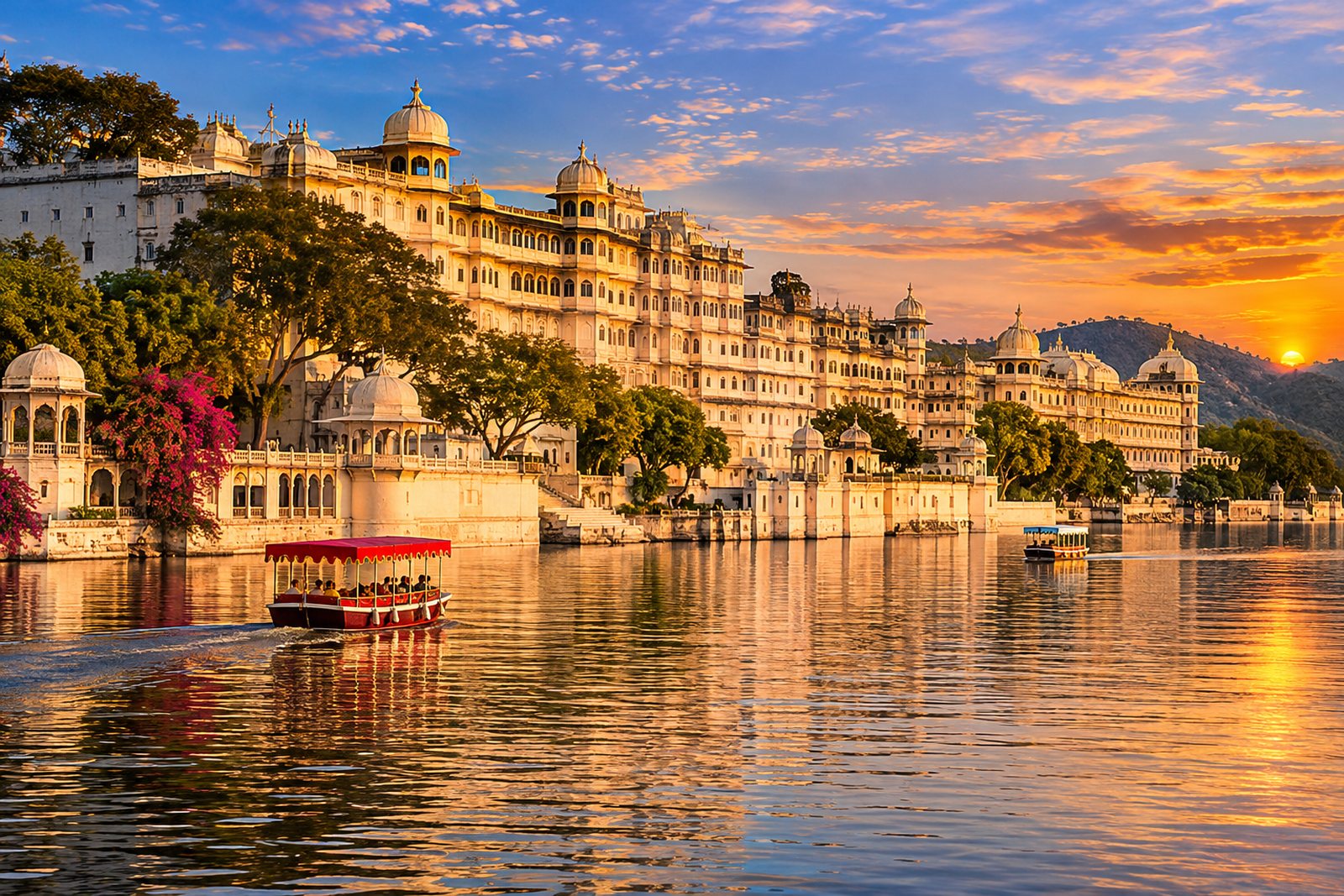
"Beta, yahan se dekho." An old guide in a white safa points from a high jharokha, and suddenly the whole of Lake Pichola is at your feet: Jag Mandir floating in the middle, ghats with women washing clothes, the hills turning purple behind them. Below you, the palace wall drops straight to the water. It feels like it has always been here.
It hasn't. The City Palace Udaipur was built in pieces, by one Maharana after another, for about four hundred years. Here is the story of how a king who was about to lose his old capital ended up starting the longest-running building project in Rajasthan, and how to see it properly today.
A king, a hunt and a sage on the hill
The story starts in the 16th century with Maharana Udai Singh II of Mewar. His capital was Chittorgarh, a great fort on a hill in open country, which also meant every army in north India knew exactly where to find it.
Local tradition says that while hunting in the Aravallis, Udai Singh met a holy man meditating on a ridge above a lake. The sage told him to build here, among the hills and water, where the land itself would protect his people. Whether it happened exactly like that, nobody can say. It is the kind of story Mewar likes to tell about itself, and it is a good one.
What history says is clear enough. Udai Singh had already begun building near Pichola when Akbar's army laid siege to Chittor. The fort fell in 1568, and after that the Mewar court settled for good in the new city by the lake. Udaipur, the city of Udai.
How the palace grew, wing by wing
The first Maharana built a core of rooms on the ridge. His successors did not knock it down and start again, as kings often did. They added. A courtyard here, a tower there, a new mahal for a new queen, a darbar hall for a new age.
That is why walking through the palace feels like flipping through a family album out of order. Narrow, twisting stairs, built to slow down any attacker, suddenly open into bright courtyards. Low doorways make tall men bow their heads. One room is all Mughal-style inlay, the next is covered in European tiles brought on long sea voyages, the next has Chinese porcelain set into the walls.
Mewar's rulers had a particular way of seeing themselves. They described the real king of Mewar as Shri Eklingji, a form of Shiva, and themselves as his diwan, his custodian. You will feel that mix of humility and pride in every courtyard.
Mor Chowk, Badi Mahal and the rooms people remember
Some corners are worth slowing down for.
Mor Chowk, the peacock courtyard, has three peacocks made of thousands of tiny glass and stone pieces, each one shifting colour as you move. They were added in the 19th century, much later than the walls around them, and they are the photograph everyone wants.
Badi Mahal surprises people. You climb and climb, and at the top you walk into a garden with trees and a pool. It sits on the natural rock of the hill, so the "garden in the sky" is really the hilltop the palace was wrapped around.
Then there is Sheesh Mahal, all mirrors and glass, and the painted rooms full of royal processions, festivals and hunts.
Did you know? A Maharana of the 1870s ordered a huge set of crystal furniture and objects from England, but he died before it arrived. The story goes that the boxes then lay unopened for about a century. Today that crystal, chairs and even a bed included, is on display in the palace's crystal gallery.
The lake that came first
Here is a detail most visitors miss. Lake Pichola is older than the palace. Tradition says it was made in the 14th century by a banjara, a grain trader who moved goods on bullocks, who built a dam so his caravans would always have water. The Maharanas later enlarged it and added more lakes around it.
So the city grew from water, not the other way round. Stand on the palace terrace and look for Gangaur Ghat and the old havelis along the bank. The whole old city still faces the lake, like it is listening to it.
What else is near the palace
- Jagdish Temple, a short walk uphill, a big carved Vishnu temple from the 17th century.
- Bagore ki Haveli on Gangaur Ghat, with an evening folk dance show that children enjoy.
- Boat ride on Pichola, with views of the palace and Jag Mandir from the water.
- Fateh Sagar and Sajjangarh, the Monsoon Palace on a hilltop, best at sunset.
If you have just two nights, the Udaipur Weekend package keeps it simple, with the palace, lake and old city covered as per the package itinerary. Couples usually prefer Udaipur Romantic for three nights and slower evenings by the water, and families with time can take Udaipur Grand for four nights and a day or two out of the city.
How to visit City Palace Udaipur today
- Where: On the east bank of Lake Pichola in the old city. Udaipur airport is around 25 km away and the railway station a short drive.
- Best time: October to March. After a good monsoon, August and September are green and the lakes are full, but humid.
- How long: Two to three hours for the museum, more with the crystal gallery and a boat ride.
- Tickets and timings: They change, and some sections need separate tickets. Check the official website before going.
- Inside: Lots of steep, narrow stairs. Elders should pace themselves, and a small water bottle helps.
- Combine with: Jagdish Temple, Bagore ki Haveli and an evening on Gangaur Ghat.
Our tip: Go in the first hour after opening. The courtyards are cool, the light through the jharokhas is soft, and you get Mor Chowk without fifty phones in front of it.
Why the palace feels alive
Most palaces in Rajasthan were built by one ruler in one burst of ambition. This one was built by a family who kept coming back to it, generation after generation, and still lives in part of it. That is why it feels less like a monument and more like a home that never stopped growing.
Before you go, read our Udaipur trip plan or browse all Udaipur holiday packages.
Frequently asked questions
Who built the City Palace in Udaipur?
Maharana Udai Singh II began the palace in the 16th century when he founded Udaipur. Later Maharanas of Mewar kept adding wings, courtyards and towers for roughly four hundred years.
Why did Udai Singh shift his capital from Chittor to Udaipur?
Chittorgarh was exposed to repeated sieges and fell to Akbar's army in 1568. Udaipur, ringed by the Aravalli hills and lakes, was far easier to defend, so the Mewar court settled there.
What is famous inside City Palace Udaipur?
Visitors usually remember Mor Chowk with its peacock mosaics, the hilltop garden of Badi Mahal, the mirror work of Sheesh Mahal, the old royal paintings and the crystal collection.
How much time is needed to see City Palace Udaipur?
Plan around two to three hours for the museum section at an easy pace, more if you also want the crystal gallery and a boat ride on Lake Pichola.
Is City Palace Udaipur open every day?
It is generally open through the week, but timings, ticket types and closures for events can change, so check the official City Palace website before you go.