Achalgarh Fort Mount Abu History: Rana Kumbha's Hilltop Ruins
A temple that worships Shiva's toe, three stone buffaloes by a pond and a broken fort Rana Kumbha rebuilt. The Achalgarh story above Mount Abu.
Most Shiva temples have a linga at the centre. Achaleshwar Mahadev has a toe. Bend down in the small sanctum, let your eyes adjust, and the priest will show you a small hollow in the rock that devotees believe is the mark of Shiva's own toe. Outside, a big metal Nandi sits facing the shrine, and above the temple a broken fort climbs the hill, wall by crumbling wall.
That hill is Achalgarh, a few kilometres beyond the town of Mount Abu. Here is the legend, the history of Rana Kumbha's fort and how to fit it into a Mount Abu trip.
The toe that holds a mountain steady
Mount Abu has old names in the Puranas, and many stories. The one told at Achalgarh is simple and lovely.
According to local legend, the mountain was once unsteady, shaking and sinking. Shiva, sitting far away in Kashi, pressed down with his toe, and the mountain grew still. That is why the place is called Achal, meaning unmoving, and why the temple worships the toe instead of a full linga. Priests will also tell you the hollow is never filled with water, however much is poured in. Believe it or not, it is a good story to hear in that small dark room.
The buffaloes at Mandakini kund
Just outside the temple is a pond called Mandakini kund. On its bank stand three large stone buffaloes and the figure of a king with a bow.
The folk tale goes like this. The pond was once filled with ghee, and three demons came every night in the shape of buffaloes to drink it. A Paramara king, Adi Pal in some tellings, shot all three with one arrow. The stone figures remember that moment. Children usually want to know if the arrow really went through all three. Parents usually say yes.
Who actually built Achalgarh fort?
Now the history. Historians generally credit the first fort on this hill to the Paramara rulers who controlled the Abu region in early medieval times. Abu changed hands over the centuries, and by the 15th century it fell within the reach of Mewar.
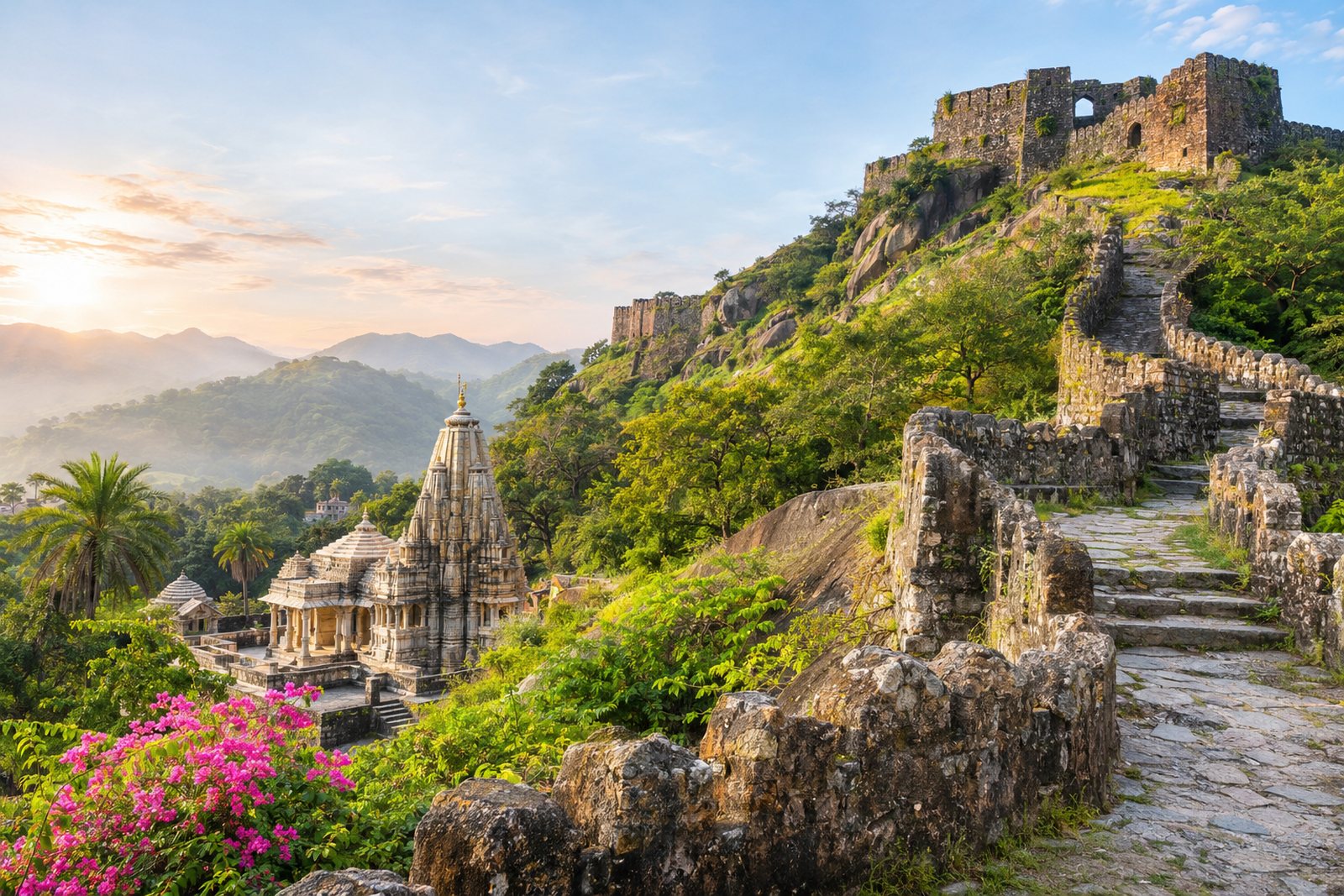
That is where Rana Kumbha comes in. Kumbha, one of the great builders of Mewar, is linked to dozens of forts, Kumbhalgarh being the most famous. He rebuilt and strengthened Achalgarh in the 15th century, using the hilltop to watch over the passes of the Aravallis. What you climb through today are his walls, broken now, with gateways still standing and water tanks near the top.
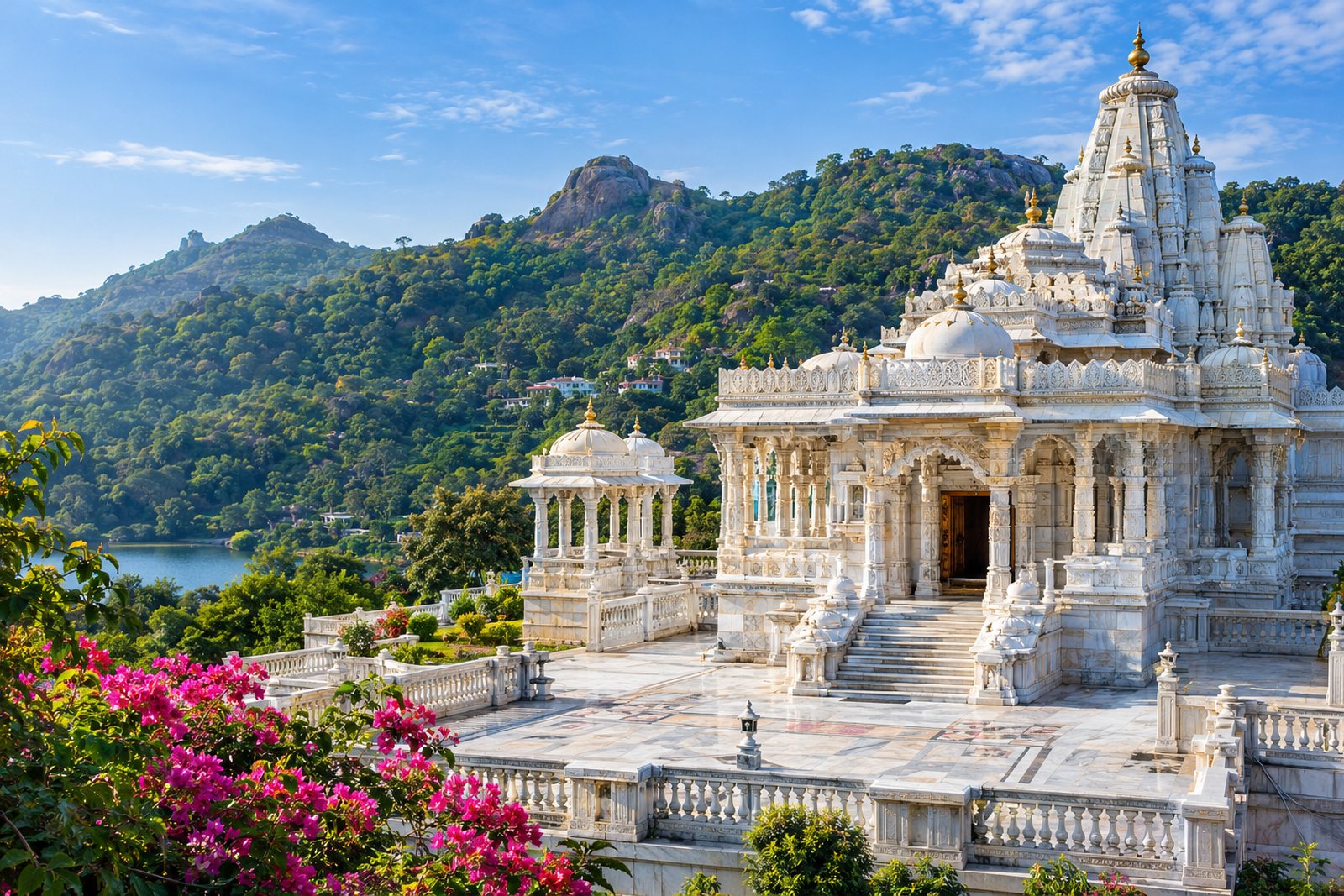
Did you know? The path up to the fort passes a cluster of Jain temples, including a Chaumukha shrine with images of the Tirthankaras facing all four directions. So in a single short climb you go from a Shiva temple to Jain shrines to a Rajput fort.
What the climb is like
The walk starts gently near the temple and gets steeper as you go. The stone is uneven. Monkeys watch you hopefully if you carry anything that looks like food. Halfway up, the view opens over green Aravalli slopes, and on a clear winter day it feels much higher than it is.
At the top there is not much left of the fort itself: walls, a few gates, old tanks, a lot of wind. But that is half the charm. No tickets in hand, no crowds, just you and the hills Rana Kumbha once watched over.
Places to combine with Achalgarh
- Guru Shikhar, the highest point of the Aravalli range, a short drive further up, with a small Dattatreya temple at the top.
- Dilwara temples, famous for marble carving so fine it looks like lace. Photography rules are strict, so check locally.
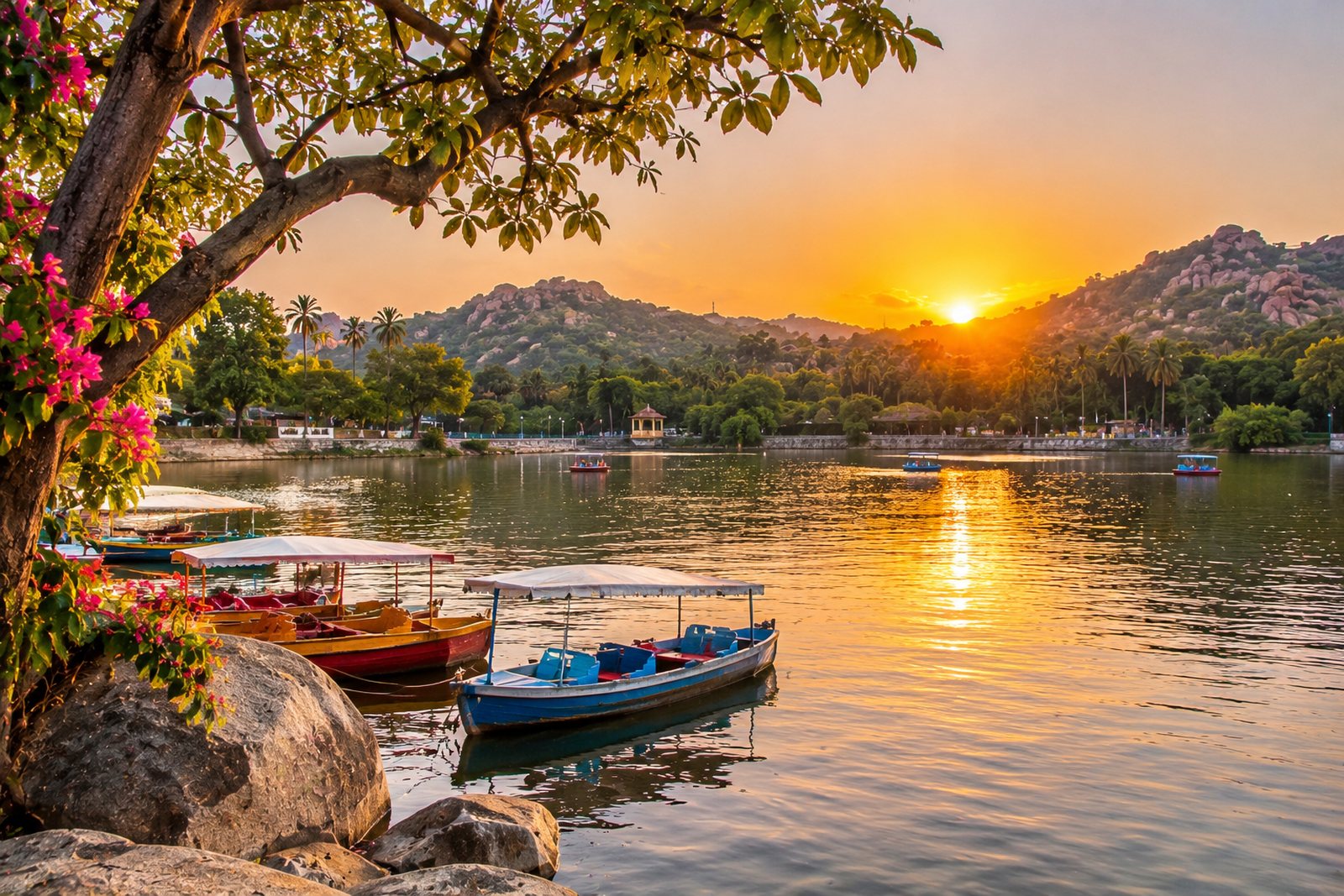
- Nakki Lake, for an evening boat ride and a walk on the promenade.
- Sunset Point, for the classic Mount Abu evening.
The Mount Abu Getaway covers Achalgarh along with Guru Shikhar and Dilwara over two nights. Coming by road from Gujarat? The Mount Abu from Ahmedabad trip starts right from the city, and the Mount Abu & Udaipur plan adds two nights by the lakes of Udaipur.
How to visit Achalgarh today
- Getting there: Achalgarh is around half an hour by road from Mount Abu town. Most people do it with Guru Shikhar on the same trip.
- Best time: October to March for cool, clear days. The monsoon turns the hills very green but the steps get slippery.
- Dress: Modest clothes for the temples; you may need to remove shoes at the shrines.
- For elders: The temple and the kund are easy. The fort climb is optional, and it is fine to wait below with a cup of chai.
- Timings: Temple timings and any entry rules can change, so check locally.
Our tip: Do Achalgarh in the morning, then drive up to Guru Shikhar before the clouds roll in. By late afternoon the summit view is often lost in mist.
Why Achalgarh stays with you
Mount Abu is mostly remembered for its lake and its marble. Achalgarh is the quieter part, the place where a legend about a god's toe sits right beside the real ruins of a king's fort. Neither tries very hard to impress. Maybe that is exactly why people remember it.
Planning your hill break? Read our Mount Abu trip plan or browse all Mount Abu holiday packages.
Frequently asked questions
Who built Achalgarh Fort in Mount Abu?
The fort is believed to have been first built by the Paramara rulers of the region. Rana Kumbha of Mewar rebuilt and strengthened it in the 15th century, and it is his fort whose ruins you see today.
What is special about Achaleshwar Mahadev temple?
Instead of a usual linga, devotees here worship what is believed to be the toe of Lord Shiva. Local belief says his toe holds Mount Abu steady.
How far is Achalgarh from Mount Abu town?
Achalgarh is a short drive from Nakki Lake and the main town, usually around half an hour depending on traffic, and it is often combined with Guru Shikhar.
Is the climb to Achalgarh Fort difficult?
The path is steep in parts and uneven at the top. Most healthy adults manage it slowly, but elderly visitors may prefer to stop at the temples and the pond below.
What else is there to see at Achalgarh?
Apart from the fort ruins and Achaleshwar Mahadev, there is the Mandakini kund with its stone buffalo figures and a group of Jain temples on the way up to the fort.